AS 1428.1.2021 Enforcement: Why 'Close Enough' No Longer Complies

The AS 1428.1:2021 update tightens compliance for public toilets, moving from "guidelines" to mandatory requirements. Key changes include mandatory mirrors in Universal Access Toilets (UAT), strict ±10mm construction tolerances, and a required 30% luminance contrast for visual accessibility. Unlike on-site builds where "close enough" often fails inspection, Modus prefab buildings are engineered to guarantee full compliance with these stricter 2021 standards before they even reach your site.
Key Takeaways
- Mirrors are Non-Negotiable: The 2021 standard changed the wording from "if provided" to "shall be provided," making mirrors essential for dignity and compliance.
- Precision is Law: "Roughly right" is now wrong. The new standard formally acknowledges strict construction tolerances of ±10mm.
- Contrast Equals Safety: You must now achieve a minimum 30% luminance contrast between doorways, fixtures, and walls to support users with low vision.
- Universal vs. Ambulant: Don't confuse them. If you are building only one cubicle, it must be a Universal Access Toilet (UAT), not an Ambulant unit.
When you’re planning a public toilet building, whether for a national park, beachside café, or community sports field, compliance isn’t just about ticking boxes. It’s about ensuring dignity, safety, and independence for every user, regardless of ability.
At Modus, we’ve been designing accessible toilet buildings since long before “universal design” became a buzzword. But with the release and subsequent recent enforcement of AS 1428.1:2021, Australia’s key standard for access and mobility, it’s now critical for everyone to understand what’s changed.
The Intent Behind the Standard
AS 1428 first emerged in 1981 (the International Year of Disabled Persons) when Australia helped pioneer a global shift in thinking: disability isn’t a personal limitation; it’s a design failure. The first edition of the standard wasn’t perfect, but it was a breakthrough.
It asked architects, builders, and councils to stop designing for the “average” user and start designing for all users.
Over the years, it evolved. First 1992, then 2009, with each iteration refining and expanding. Then came the 2021 standard. This edition didn’t overhaul the system, but it has sharpened it, closing loopholes and turning suggestions into requirements.
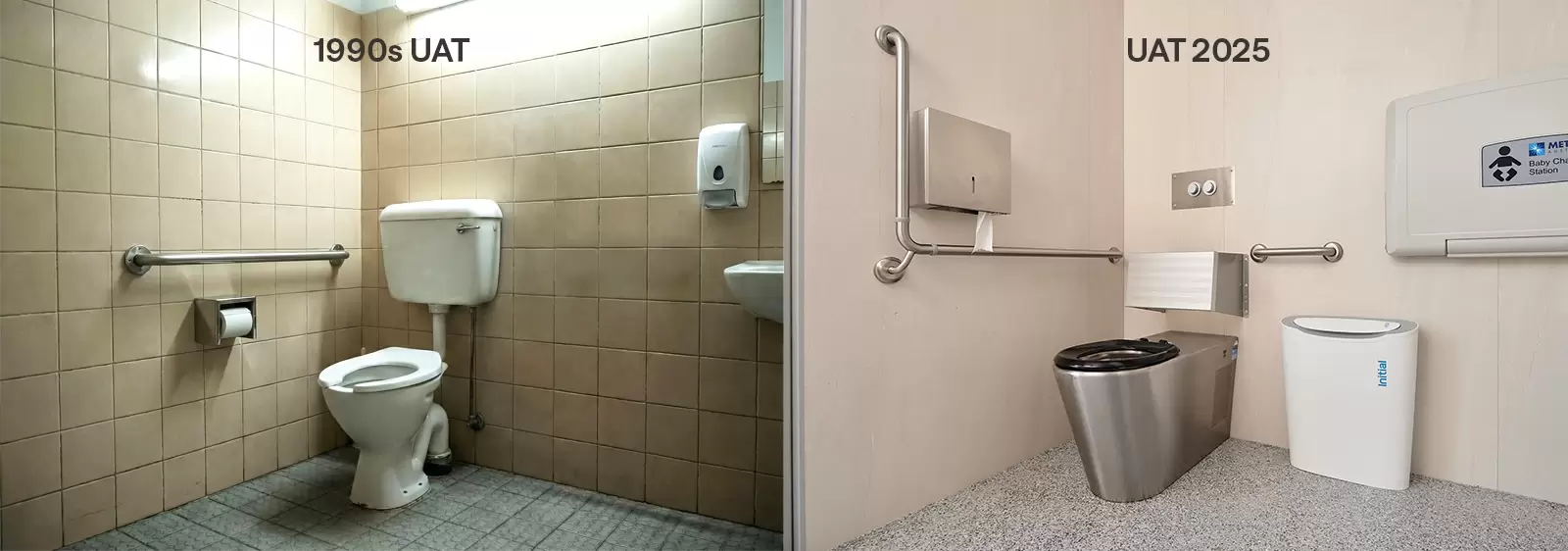
Notably, it has declared that mirrors in Universal Access Toilets (UATs) are no longer optional. They are essential. Everyone ought to be able to see themselves — to adjust their collar, wipe a smudge, check their hair.
Critical Updates: Mirrors and Tolerances
The 2021 update brought roughly fifty editorial tweaks and structural reorganisations, but its soul lies in details such as grab rails.
In the 2009 version, measurements for backrest height and placement didn’t add up. That was a frustrating ambiguity that left builders guessing. The 2021 edition fixed that. Now, every dimension has purpose. Every millimetre matters.
Even construction tolerances — those little allowances for real-world imperfection — are formally acknowledged. ±10mm might sound trivial, until you’ve stood in front of an inspector who wouldn’t sign off because a doorway was 9mm too narrow.
Plus, there’s the language. Where the 2009 standard said “if mirrors are provided,” the 2021 version says “a mirror shall be provided.” It’s the difference between leaving dignity for users to chance, and guaranteeing it.

Snapshot: 2009 vs 2021 Standards
The 2021 update brought roughly fifty editorial tweaks, but these five have the biggest impact on compliance and design.
| Item | Previous Standard (2009) | New Standard (2021) |
|---|---|---|
| Mirrors | Optional ("If mirrors are provided...") | Mandatory ("A mirror shall be provided") |
| Luminance Contrast | General guidance | 30% minimum contrast required between elements |
| Construction Tolerance | Undefined (Ambiguous) | ±10mm formally acknowledged |
| Backrests | Ambiguous placement measurements | Precise height and width definitions |
| Circulation Space | Standard exclusion zones | Strict 1400mm exclusion zone (exceptions for paper/grabs only) |
5 Non-Negotiable Design Pillars
Although AS 1428.1:2021 is a large document (it runs to over a hundred pages), what you really need to understand is the five pillars underpinning true accessibility — especially in a Universal Access Toilet.
1. Access begins before the door
Access starts with the path — firm, level, uninterrupted and with sufficient width to allow a wheelchair to access. At Modus, we avoid raised structures wherever possible, opting instead for concrete pads that sit flush with the ground. No ramps means no steep slopes, no handrails jutting into circulation space, no risk of rollback. Just a smooth roll from car park to cubicle.
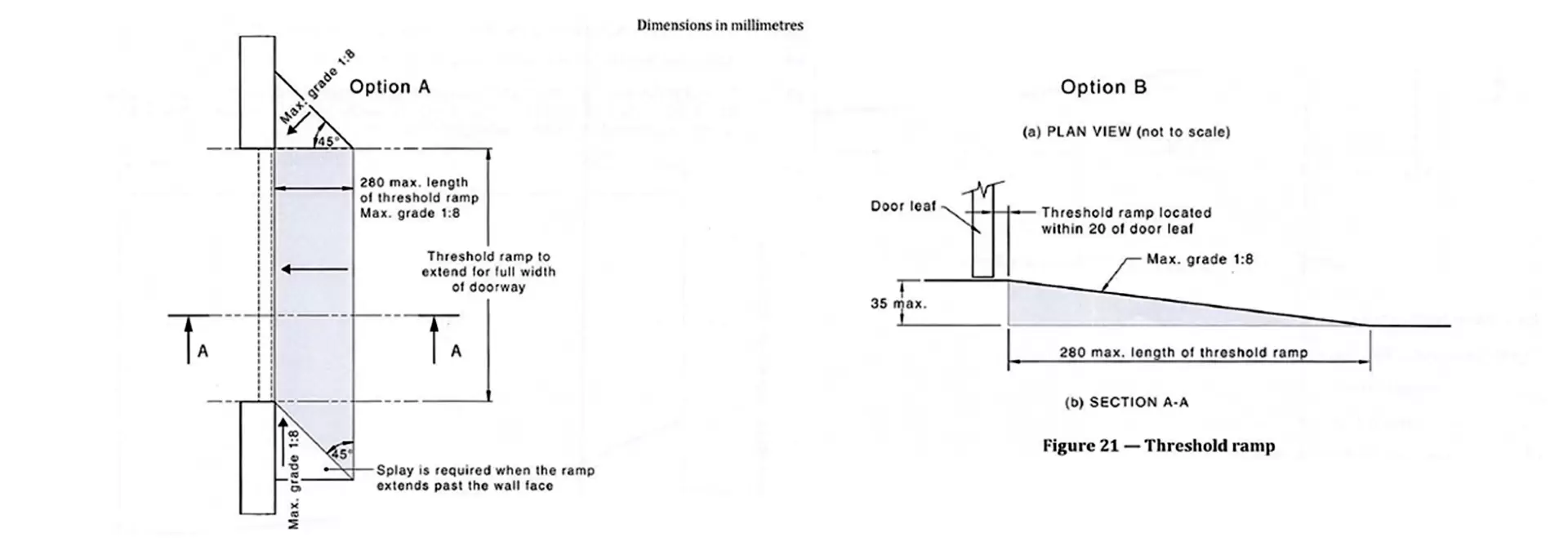
Figure 21: Threshold ramp requirements (Source: AS 1428.1:2021, p.42)
2. Space is critical
A wheelchair user needs room — not just to enter, but to turn, to transfer, to exist without contortion. That’s why AS1428.1 insists on a 1400mm floor exclusion zone around the pan with specific exceptions for a handful of items including toilet paper dispensers, grabrails, backrests, and a portable sanitary disposal unit. In addition, there should be generous door swings, and layouts that allow a chair to be parked while its occupant washes their hands or checks the mirror.
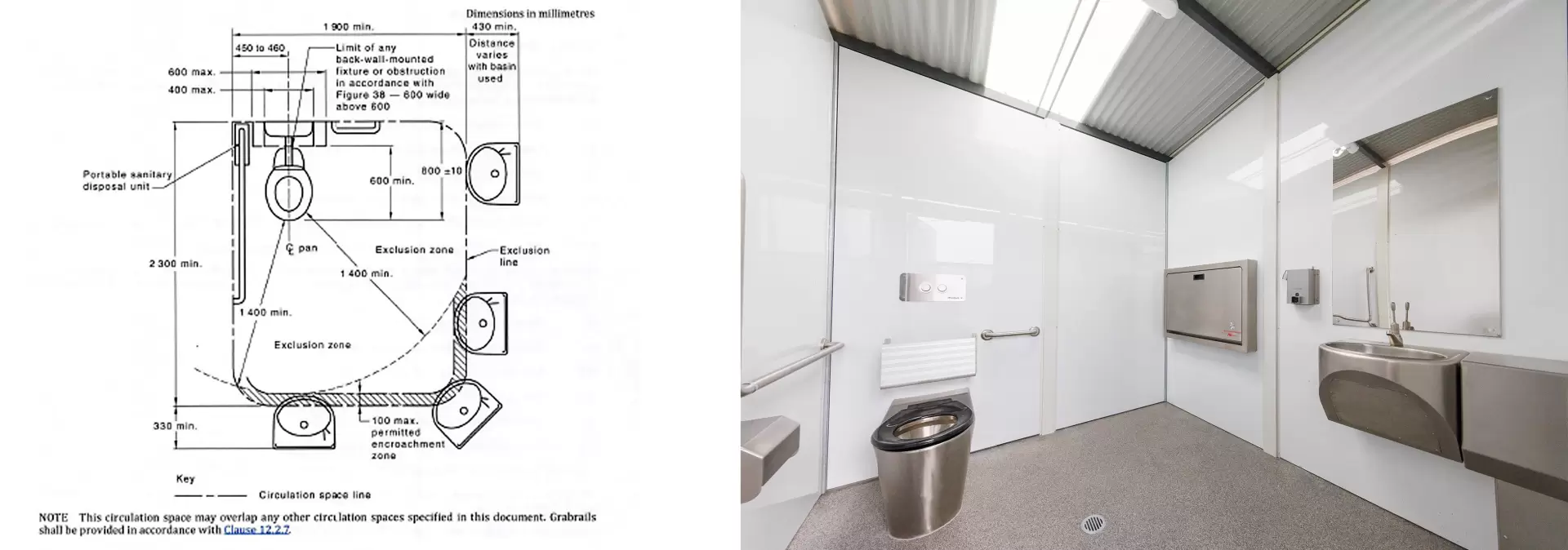
Figure 43: Circulation space and exclusion zones for WC pan (Source: AS 1428.1:2021, p.88)
3. Things within reach
Door handles at 900 to 1100 millimetres above the floor. Basin taps that respond to a nudge, not a grip. Soap dispensers, towel hooks, toilet paper holders — all placed where they can be accessed without strain (within 500mm of the pan). Even the clothes hook comes with rules: 1200 to 1350 millimetres high, set back from corners (no closer than 500mm) so a wheelchair can tuck in close.
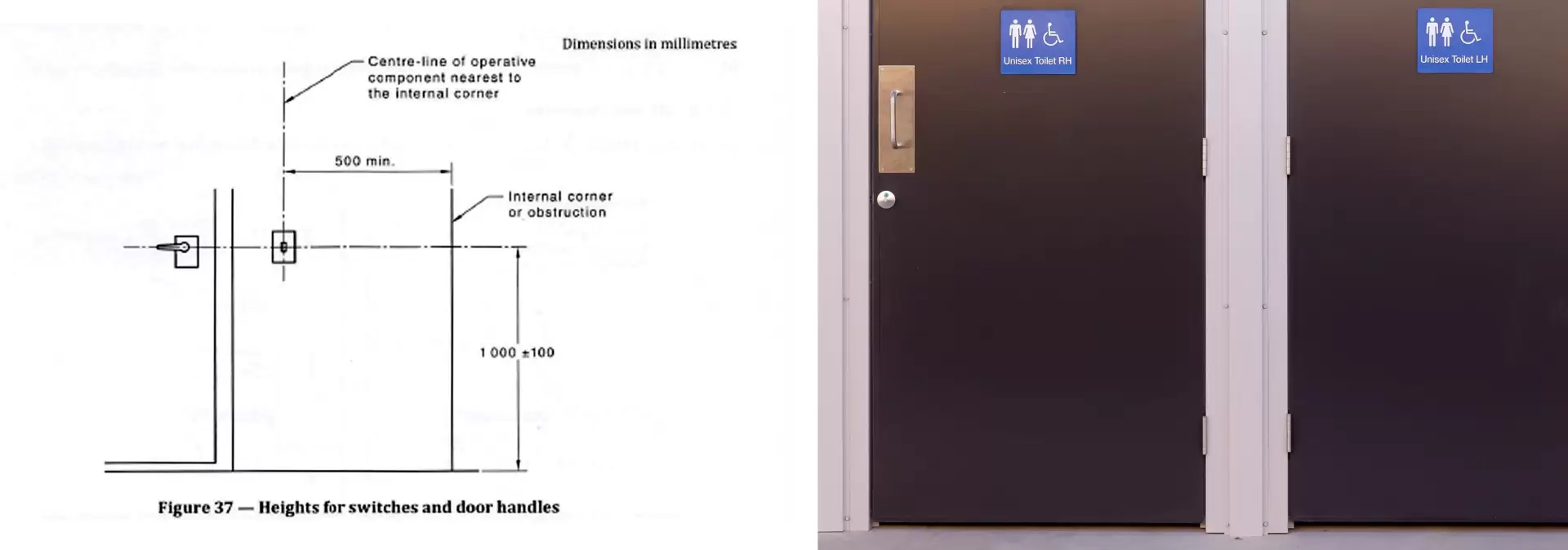
Figure 37: Required heights for switches and door handles (Source: AS 1428.1:2021, p.81)
4. Rails for balance
Grab rails are non-negotiable. Not one. Not decorative. Two rails — strong, secure, and strategically placed across the rear wall and at the side wall nearest the WC pan. A single rail is not sufficient. Not for someone hoisting themselves up after a fall. Not for a parent helping a child.
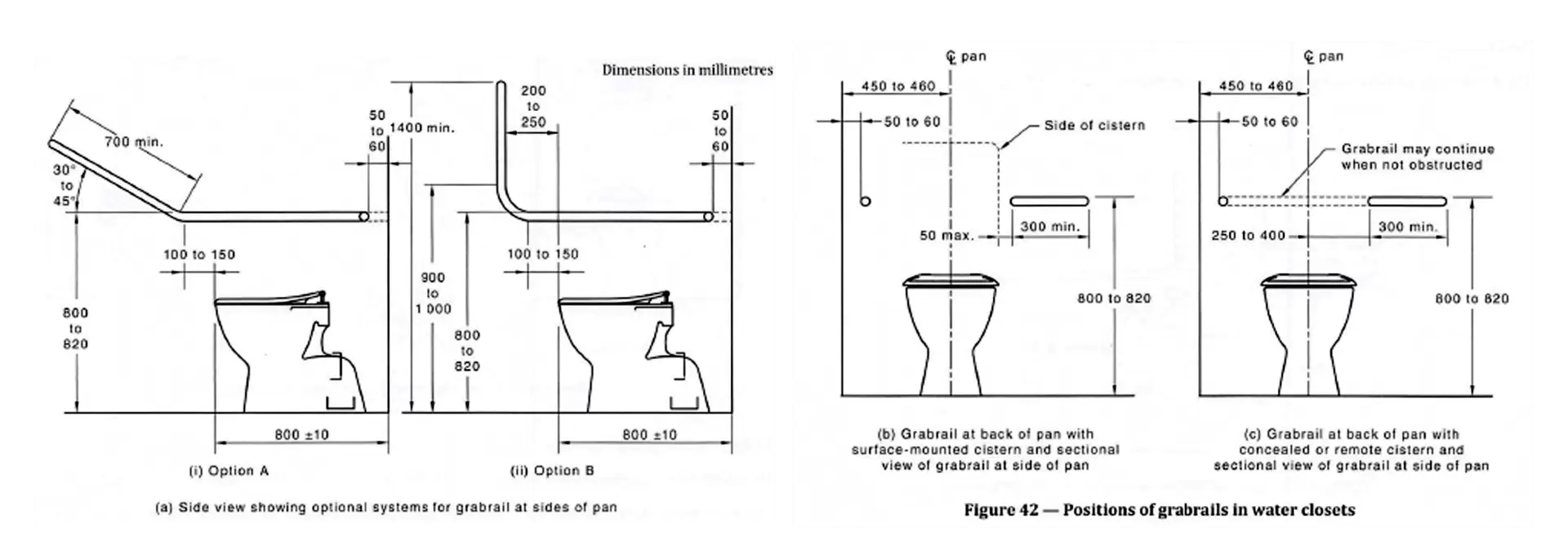
Figure 42: Mandatory positions for rear and side grabrails (Source: AS 1428.1:2021, p.86)
5. Visibility: not just light, but contrast
AS1428.1 2021 states a minimum “luminance contrast” of 30% is required, as well as clear, tactile Braille signage. A door should stand out from its frame. A handle from its background. Fixtures from walls. The pan from the floor. For someone with low vision, these contrasts are an essential guide.
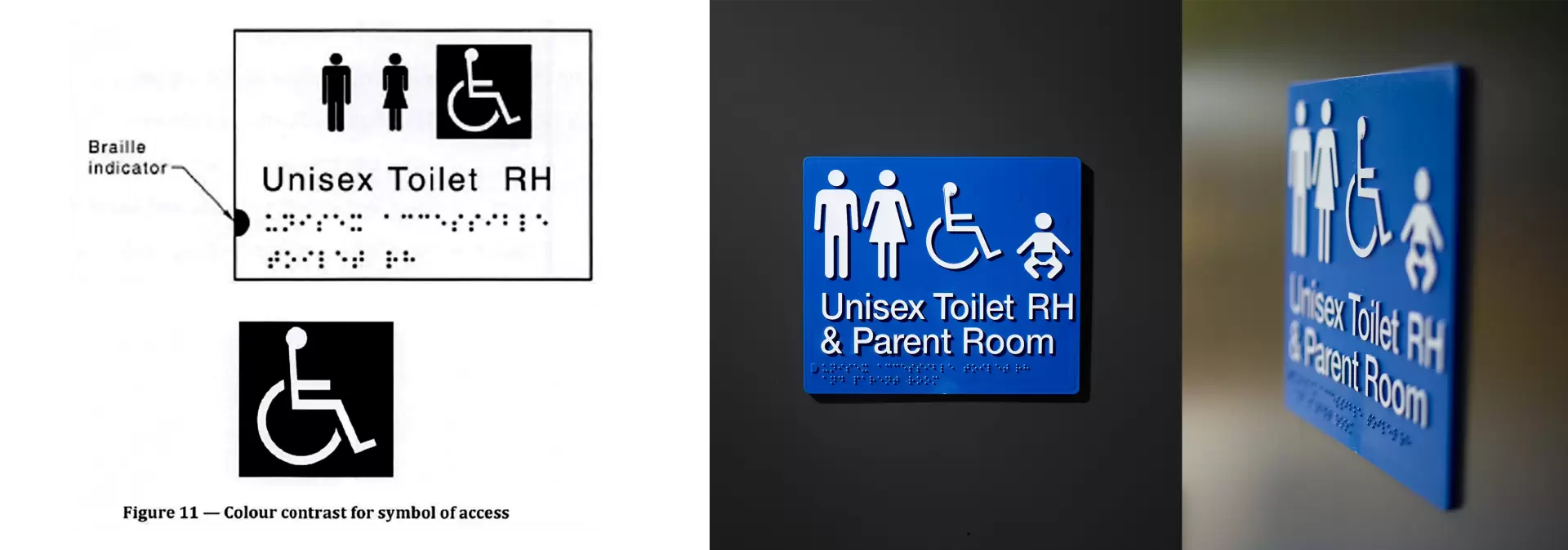
Figure 9(A): Tactile signage and contrast requirements (Source: AS 1428.1:2021, p.26)
Download the guide for a 30 year cost comparison

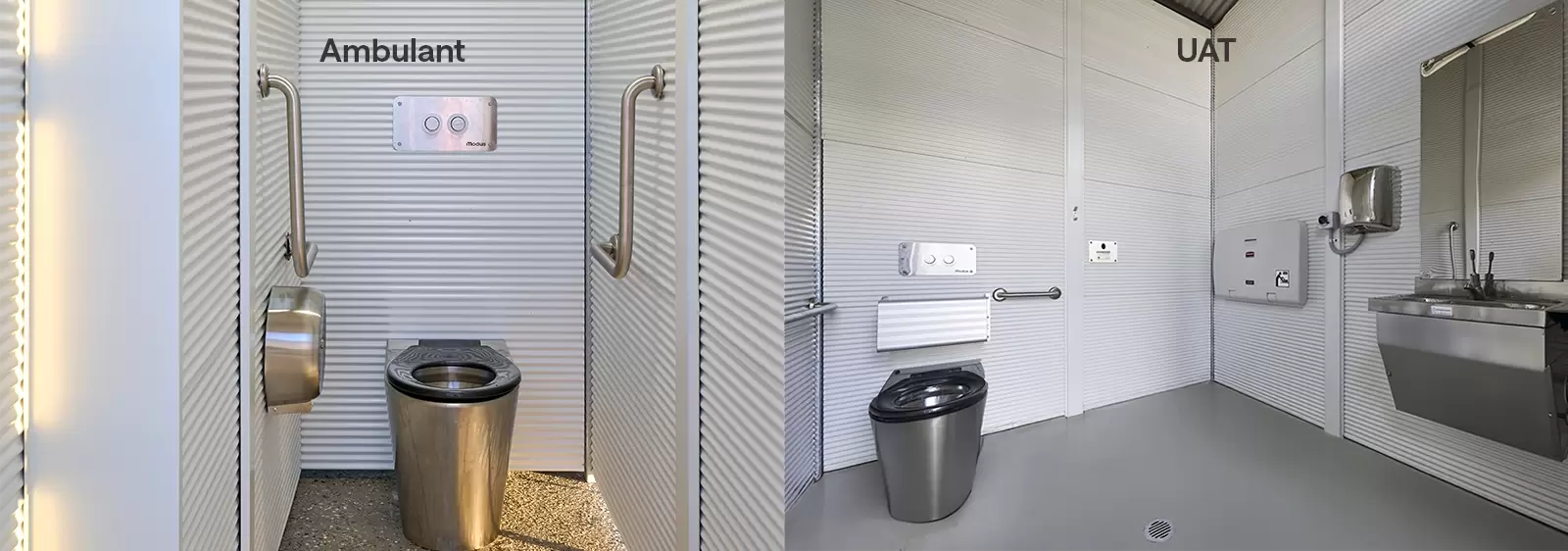
UAT vs Ambulant: what's the difference?
Not every accessible toilet serves the same purpose. An ambulant toilet — designed for those with limited mobility but who don’t use wheelchairs — is simpler, smaller, cheaper. It still requires thoughtful design in line with ambulant toilet standards: grab rails, reachable fixtures, slip-resistant floors. But it has the full spatial and accessibility demands of a UAT.
However, if you’re building just one toilet, it must be a UAT. Multiple cubicles? At least one must be universally accessible. Councils vary in interpretation, but the intent is clear: universal access is the baseline.
We often advise clients to start with a UAT. Yes, it costs more. But it covers more people. It satisfies stricter inspectors. And it future-proofs your investment.
Compliance on Challenging Sites
We’ve designed toiletsperched on hillsides, tucked into bushland, squeezed beside footpaths. That’s why we feel confident in saying that compliance isn’t about rigidly applying clauses, it’s about understanding intent and adapting intelligently.
In one instance, the client’s original plan involved navigating uneven gravel to reach the toilet block. Rather than engineer a complex ramp system, we proposed relocating the structure behind an existing shelter — creating a flat, direct path that satisfied both council and common sense. No drama. No demolition. Just smart design.
That’s the Modus promise: we don’t just deliver compliant buildings. We deliver solutions that work — on your site, within your budget, for your community. We’re not access consultants, but we speak their language. We’ve argued cases, negotiated variances. We know where flexibility exists — and where it doesn’t.
Why Accessibility Matters
A public toilet might seem mundane, but for someone with a disability, its design can mean the difference between independence and isolation. That’s why AS 1428.1:2021 isn’t bureaucracy, it’s a blueprint for belonging.
And at Modus, we’ve embedded its principles into every module we fabricate, every hinge we install, every basin we mount. We think not just about what the code says today, but what users will need tomorrow.
So whether you’re a council planner drafting specs, a developer breaking ground, or a small business owner adding facilities for your customers, choose a partner who sees beyond dimensions and deadlines. A partner who understands that good design isn’t just measured in millimetres, but in moments of user dignity.
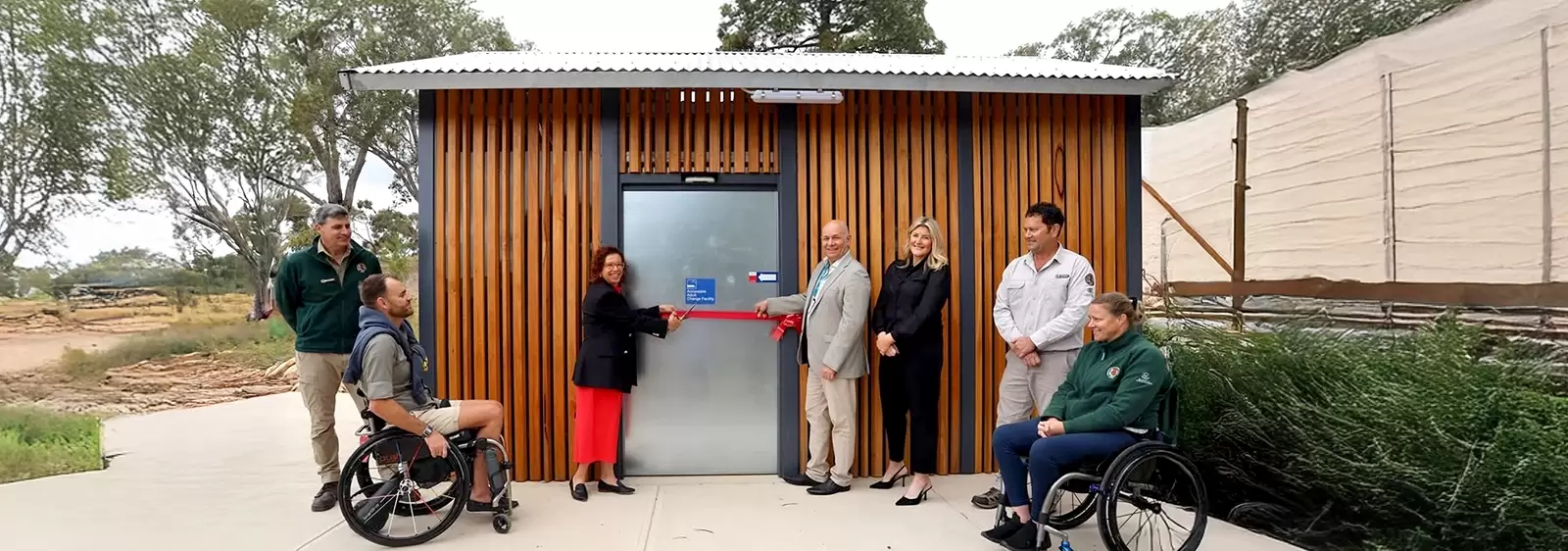
Minister for Social Services Amanda Rishworth, Erin Thompson MP, Mayor of Marion Chris Hanna, Disability Advocate Shane Hryhorec, and the team at Department for Environment and Water at our Changing Places Facility in Glenthorne National Park.
Frequently Asked Questions
Do I need to upgrade my existing toilets to meet AS 1428.1:2021?
Is a 'Universal Access Toilet' (UAT) the same as a 'Changing Places' facility?
Who is responsible for certifying the compliance of a prefab building?