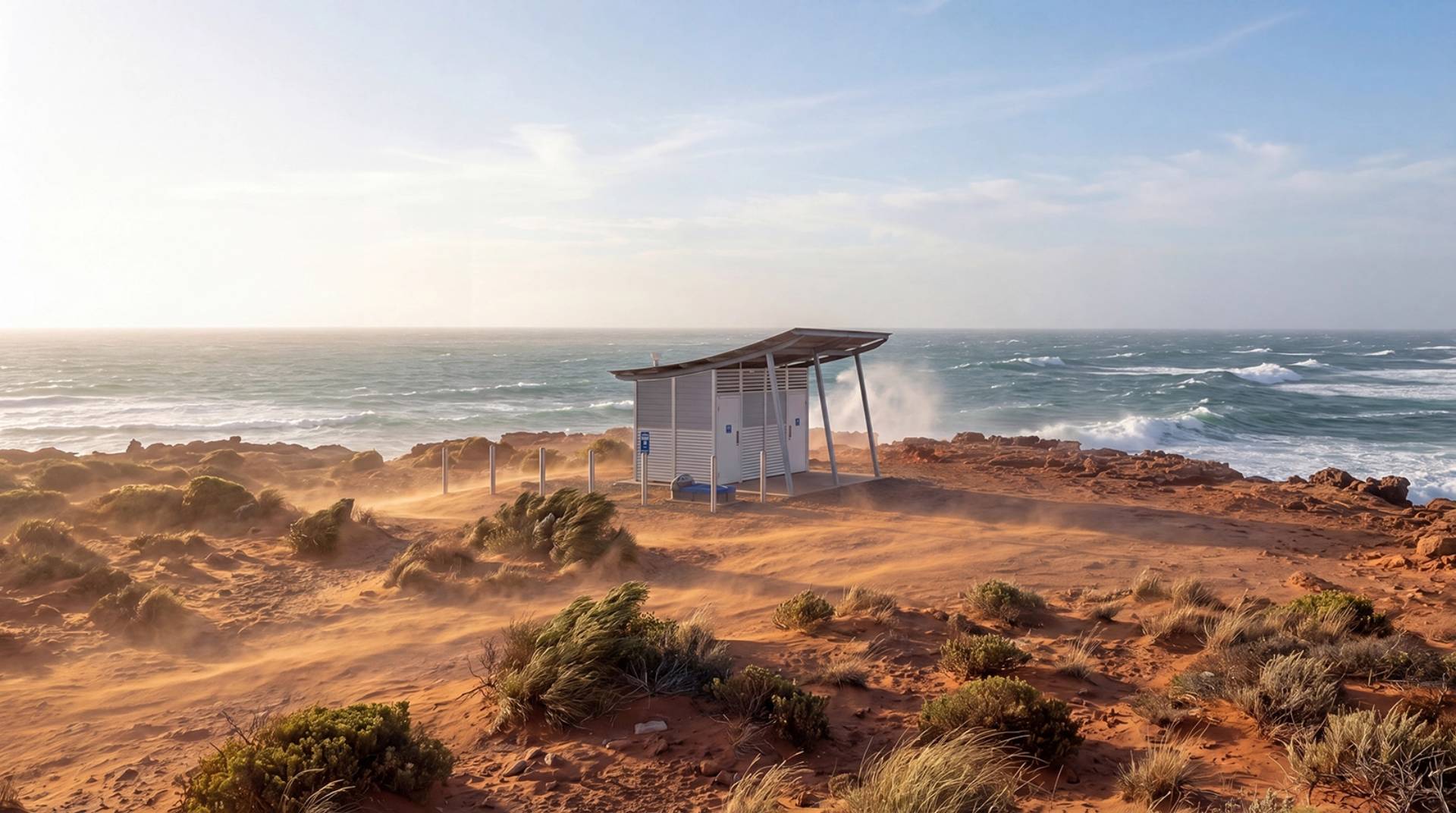
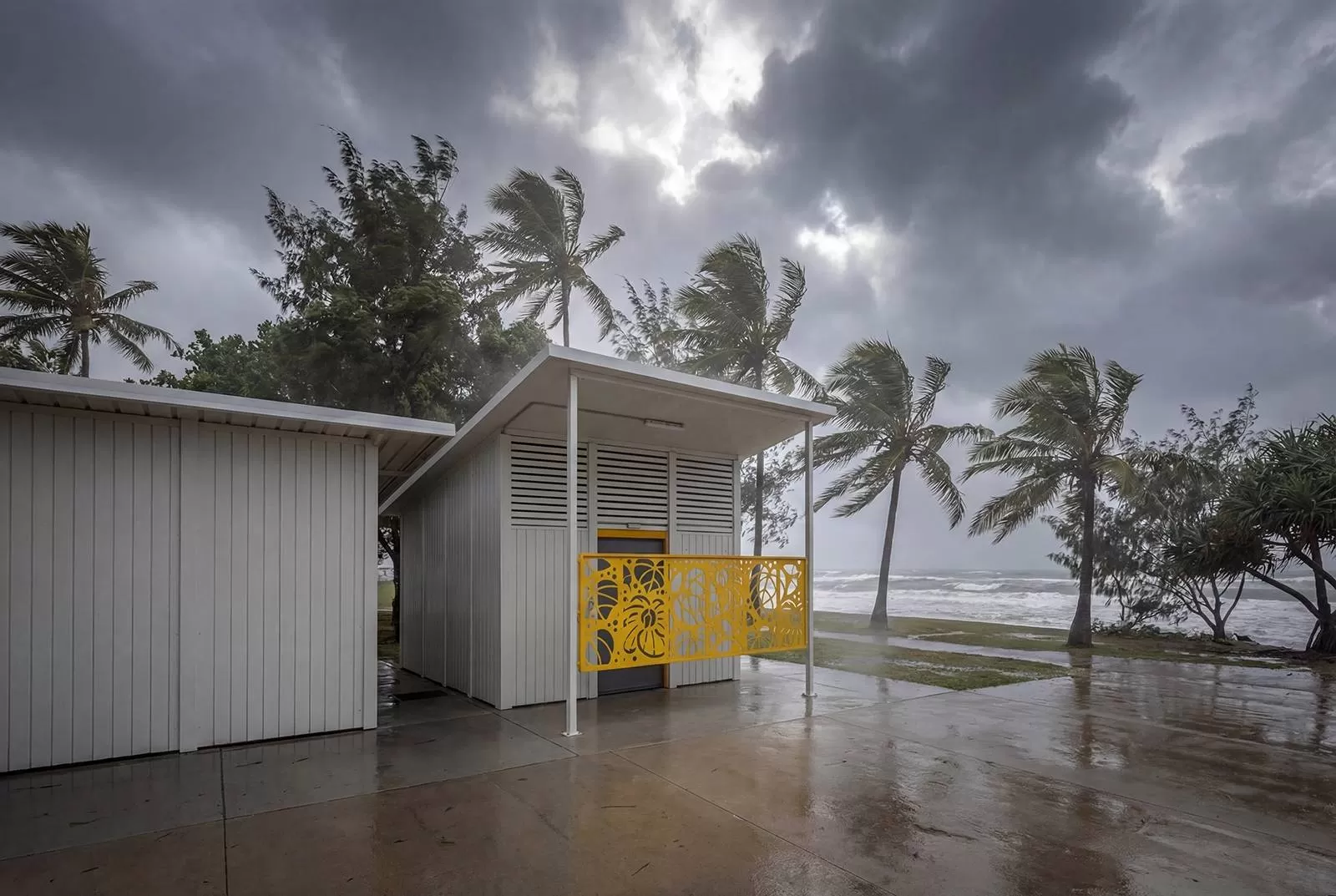
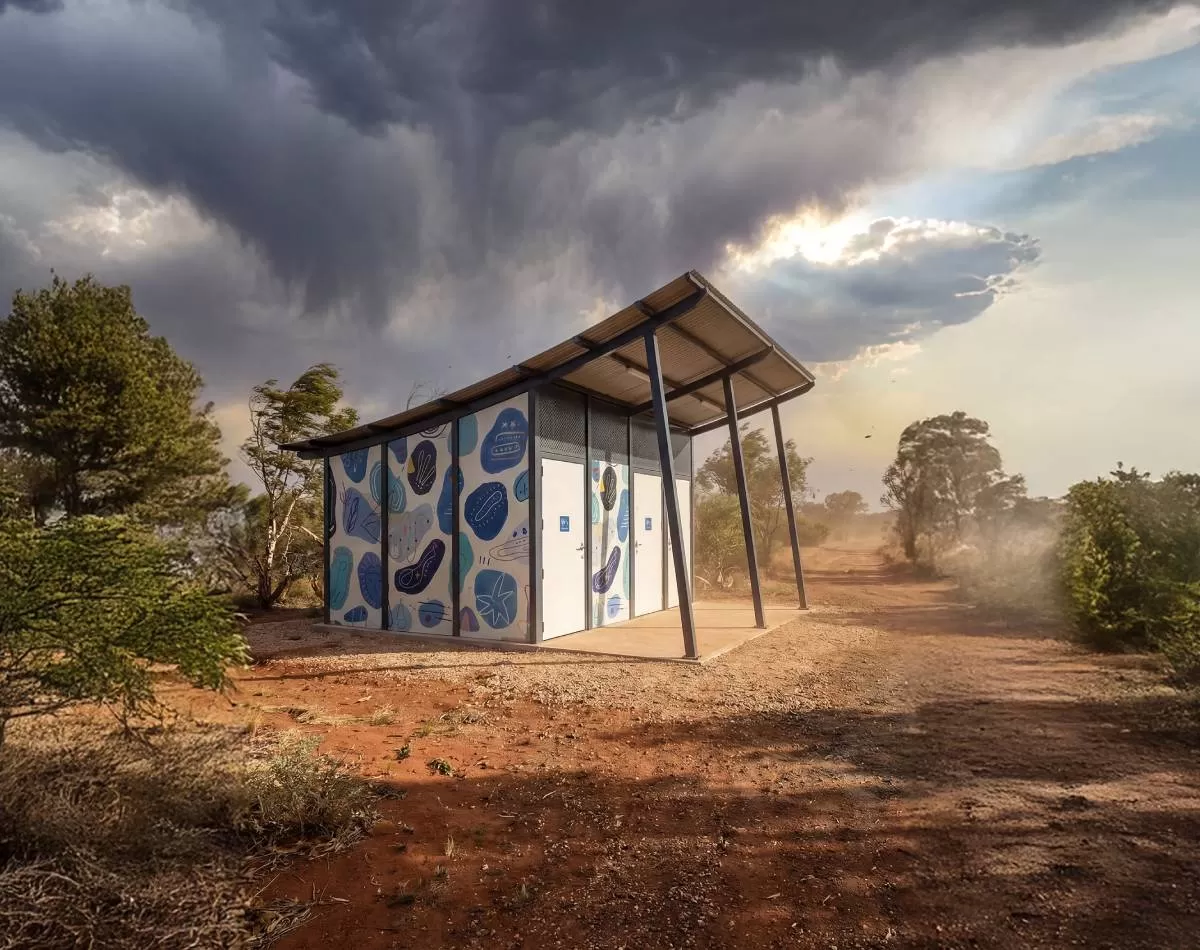
Engineered for Australia's toughest conditions. Proven in real-world extreme weather events.
Planning and building for what’s coming
The 2024-25 and 2025-26 cyclone seasons have been the most active in nearly two decades, with severe systems and associated flooding impacting communities across Queensland, Western Australia, and the Northern Territory. Climate projections are clear - while fewer cyclones are expected overall, the ones that form will be significantly stronger, tracking further south and delivering heavier rainfall. For councils managing public amenity infrastructure in these regions, the question is no longer whether your assets will be tested. It is how well they hold up when they are.
Cyclone-Rated Structural Engineering
IEvery Modus Toilet building in a cyclone region is certified by a registered
structural engineer to the specific wind pressures at your site. In
cyclonic regions, roof fixings are upgraded to
14-gauge cyclonic tek screws with oversized 25-30mm rubberised
gaskets, fixed at every second crest on every purlin. Base connections use
M12 threaded rods chemically anchored into the concrete pad. These are targeted, precise upgrades to the connections that matter
most - engineered to keep the roof on and the building anchored in
wind speeds up to 317 km/h.
M12 threaded rods
14-gauge cyclonic tek screws
Pressure Relief Through Ventilation Design
During cyclonic events, rapid pressure changes inside and outside a building can cause catastrophic structural failure.
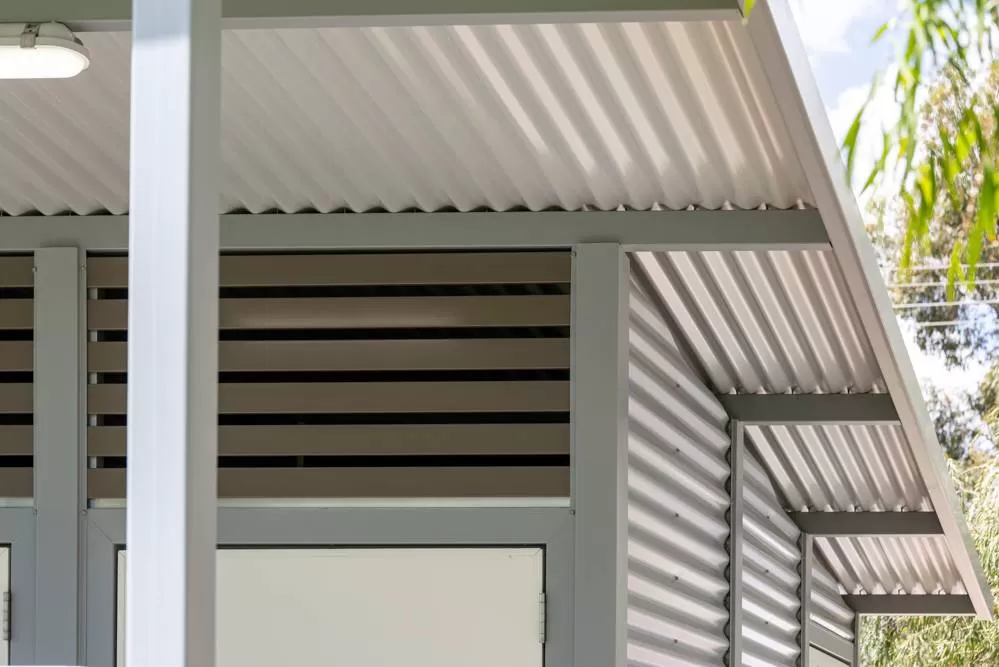
Aluminium ventilation louvres built into Modus buildings provide natural airflow under normal conditions and act as pressure relief during extreme wind events, equalising the load and reducing the risk of the building failing from pressure differential rather than direct wind force.
Corrosion-Resistant Materials
Cyclone regions and coastal exposure go hand in hand. All structural
framing is hot dip galvanised and finished with a
two-pack epoxy paint system for dual-layer corrosion
protection, rated for a 30+ year design life even in Region D.
Roofing uses Colorbond Ultra, specifically engineered
for severe coastal and tropical environments and rated for use within
100 metres of breaking surf. Where timber cladding is desired, we use
wood-look aluminium - delivering the natural
aesthetic without the rot, maintenance, or cyclone vulnerability.
Hot Dip Galvanised
Colorbond Ultra Roofing
Designed to go under and come back
Most buildings try to keep floodwater out. Modus buildings are engineered to let it pass through and recover quickly. Wall panels are raised from ground level, creating gaps that allow floodwater and debris to flow through rather than building up pressure against the structure. This prevents the catastrophic failure that occurs when solid walls act as a dam during flood events. Panel heights are adjusted based on site-specific flow rate data from the design consultation process.
Water-Resistant Materials and Rapid Recovery
Interior cladding is designed specifically for water resistance -
epoxy flooring, stainless steel fixtures, and non-porous
surfaces
that can be pressure-washed clean and returned to service quickly
after a flood event. Unlike concrete or masonry, which absorbs
moisture and retains odour, our materials do not trap water and dry
quickly.
If any panel is damaged beyond cleaning, individual panels can be
replaced without rebuilding the entire structure.
Epoxy Flooring
Durable Stainless Steel Fixtures
Protected Electrical and Sewage Systems
All
electrical outlets, wiring, and control systems are
elevated
above predicted flood levels, protecting them from water damage and
significantly reducing the time and cost to get the building
operational again.
Backflow prevention devices and efficient containment
systems keep floodwaters from entering sewage lines, protecting both
the infrastructure and public health.
Elevated Electrical Systems
Sewage Safeguard System
"The Modus buildings have held up exceptionally well through multiple
flood events since installation. The ability to pressure-wash and have
them back in service within days, rather than months of rebuilding, has
been a genuine game-changer for our community”
Assets and Maintenance Manager,
Lismore City Council
Download the Flood and Cyclone Resilient Guide
Our comprehensive guide covers cyclone and flood design solutions in
detail, includes planning checklists for both, and features real-world
case studies from some of the toughest environments.
Past Cyclone and Flood Projects
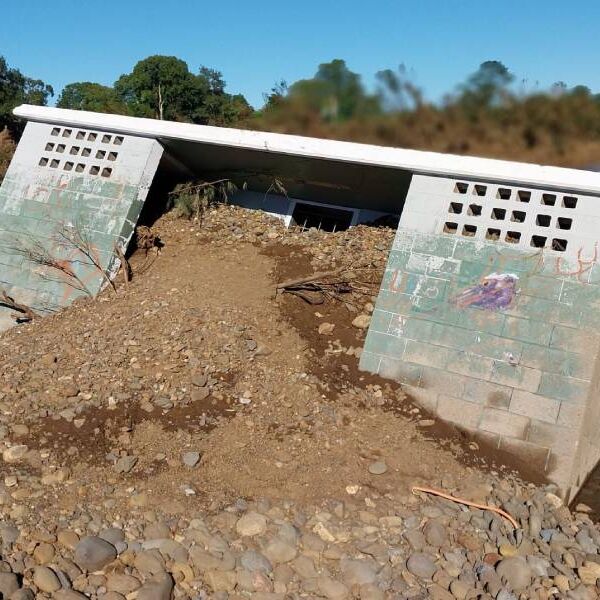
Taree - Same Flood, Two Outcomes
In May 2025, major flooding hit Taree. Two buildings in the same
flood zone. Two very different results.
Traditional masonry toilet block at Wingham Brush destroyed and
buried in sediment
Modus prefabricated building went fully underwater, remained
anchored and undamaged
Back in service within days after a pressure wash
Key difference: raised wall panels let floodwater pass through
rather than building up pressure against solid walls
Post-flood May 2025
Nearby Brick Block, Winham
De Grey River, WA
Engineered for Region D - wind speeds up to 317
km/h
Withstood Cyclone Zelia in February 2025 with
zero damage
Hot dip galvanised steel with two-pack epoxy
for corrosion resistance
Cyclonic roof fixings and upgraded M12 base
connections
Fully operational since 2013 in one of
Australia's harshest cyclonic environments
Post Cyclone Zelia
Lismore Amenity Upgrades, NSW
10 public amenity buildings delivered as part
of a flood recovery program
Jointly funded by the Australian and NSW
Governments
Flood-resilient design with raised wall panels,
non-porous materials, and elevated electrical systems
All facilities remained operational after
Tropical Cyclone Alfred in March 2025 - only
needed a wash-down
Delivered over 12 months across
seven sporting venues and three community sites
Funding Available - Disaster Ready Fund
The Australian Government's Disaster Ready Fund provides up to $200 million annually for disaster resilience and risk reduction projects, matched by state and territory contributions. Round Four is expected to open in early to mid-2026, with infrastructure investment as a key focus. Public amenity buildings in flood and cyclone-prone areas may be eligible.
Book a Free Consultation
with Project Consultant
Tafara Matubede
It's free, it's virtual, and it'll save you months of back-and-forth.
One session with Tafara and you'll have everything you need to move your project forward.