How to Plan, Design & Deliver Your Public Toilet Project

Public toilet projects require a structured approach across three key phases. First, define your project by confirming budget, procurement pathway, and community needs. Second, plan your design by selecting the site, ensuring compliance with AS1428 and CPTED standards, and securing approvals. Finally, execute delivery through manufacture, installation, commissioning, and establishing maintenance schedules, from concept to completion. The typical project lifecycle follows these stages:
- Project Definition: Confirming the need, objectives, and budget envelope.
- Procurement Strategy: Deciding on the procurement pathway and engaging internal stakeholders.
- Site & Scope: Selecting a suitable site and building type based on user demographics and physical constraints.
- Design & Compliance: Completing concept and detailed design, including Public Toilet Safety CPTED and accessibility (AS1428) checks.
- Approvals: Securing necessary planning and building permits.
- Delivery: Procuring, manufacturing, and installing the toilet building.
- Handover: Commissioning, handover, and establishing operations and maintenance schedules.
Project overview: from idea to open facility
Public toilet projects are rarely “just another asset”. They must balance community expectations, strict accessibility standards, public toilet safety, public toilet safety (CPTED), budget constraints, and ongoing maintenance demands. And balancing all these factors while delivering on time is not easy.
In practice, most councils use a staged process:
- The Concept Phase: An initial need is identified—often triggered by a new park, a foreshore upgrade, or a heavily used sports reserve—and a budget is set.
- The Planning Phase: You decide on procurement, choose a specific site, and choose what type of building and floorplan best fits the location and how many people are expected to use the facility.
- The Execution Phase: Designers and suppliers contribute specialist advice about standards and constructability, while internal staff focus on approvals and getting community feedback.
By the time manufacture and installation begin, the most successful projects have already resolved the big decisions. We’ve developed this guide to make the steps that follow clearer.
Step 1: How much budget do you really have to work with?
Your initial task is to get a firm grasp of your budget. The reality is that in local government, resources are limited and budget dictates the design, not the other way round. Assets and planning departments will typically allow a set amount for the toilet building in longer term strategies that need to be verified. If you are preparing a future capital works budget, obtaining an accurate up-to-date budget price from a reputable partner like Modus is helpful. While outside the scope of this document, if internal funding is inadequate you might be able to obtain external funding from state or federal government agencies to make the project possible.Step 2: What procurement pathway will you follow?
After firming a budget, you need to establish a procurement process. One might well already exist. Depending on your organisation’s policy — and your budget — you might have options. Large projects often require a tender — asking for responses from more than one organisation and then evaluating them according to their value for money. This can be very time- and resource-intensive. In some instances you may be able to put a Request for Quote (RFQ) to a trusted supplier or partner. This can dramatically shorten timelines.
Step 3: How many people will this facility need to serve?
Efficient public toilet design must account for expected user volume and peak usage times to minimise queues and congestion.
Consider the location and anticipated foot traffic when determining the number of stalls, urinals, and sinks. Use data from similar facilities or conduct surveys to estimate Use data from similar facilities or conduct surveys to estimate usage patterns and adjust your design in response. Think about waiting areas with seating for high-traffic locations. By focusing on capacity and flow management, you can create a comfortable experience for users while reducing wait times.
Step 4: What does your community need and expect?
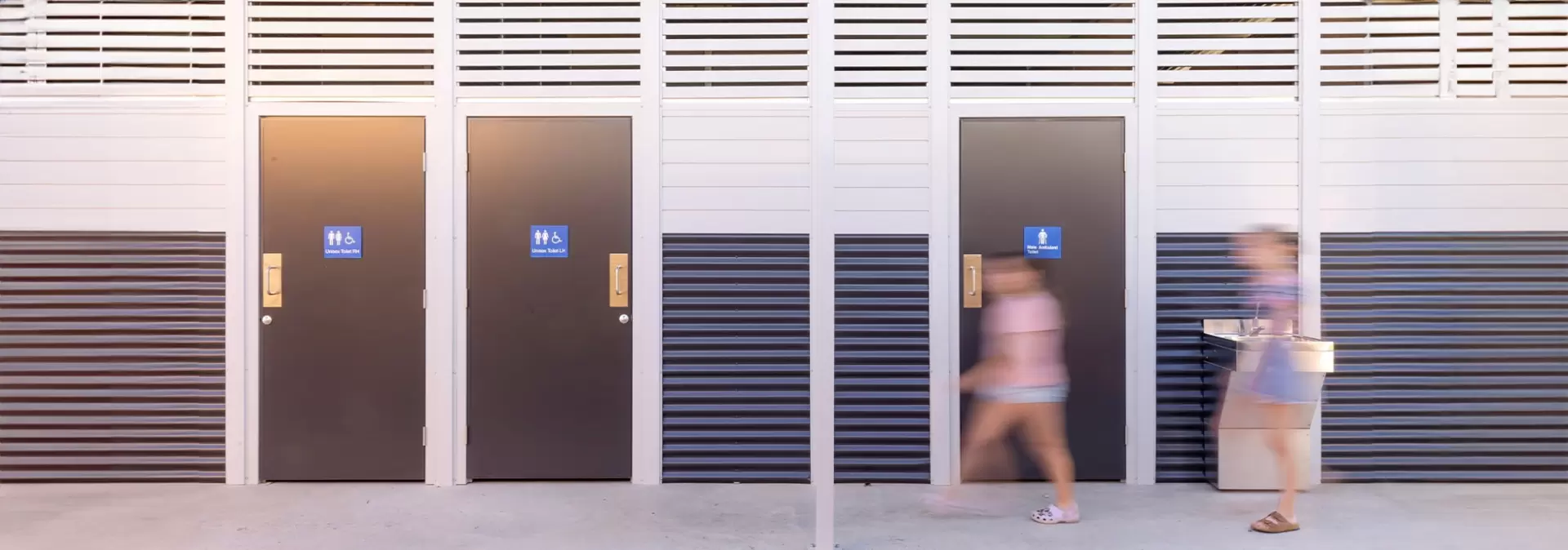
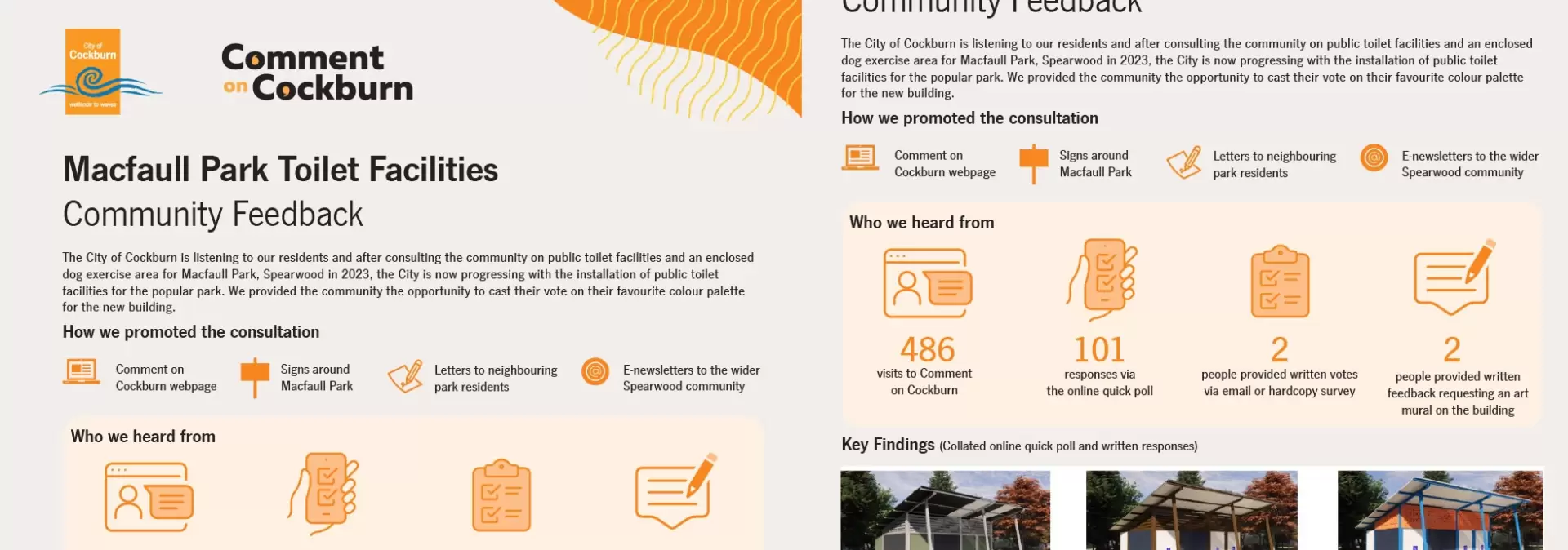
There is typically a requirement in local government to perform a community consultation on the implementation of new infrastructure (or the upgrade of old infrastructure).
Online platforms, social media channels, and surveys, may all be useful here. If there is, you’ll need to set aside about a month for it — sharing ideas (maybe even early plans and renders of the project), and participating in discussions to get residents’ thoughts. After that you’ll need to consider this feedback and decide what to use, and what to ignore.
Step 5: Is your chosen site actually ready for a toilet building?
The builder/installer will be responsible for many things directly related to the construction of the toilet, but there are others that fall outside their scope — and into your area.
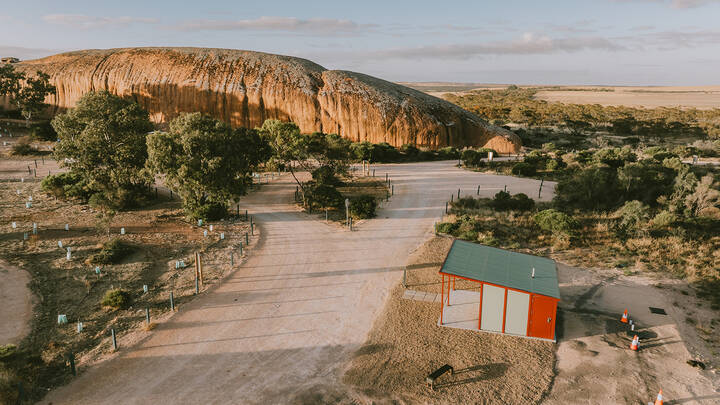
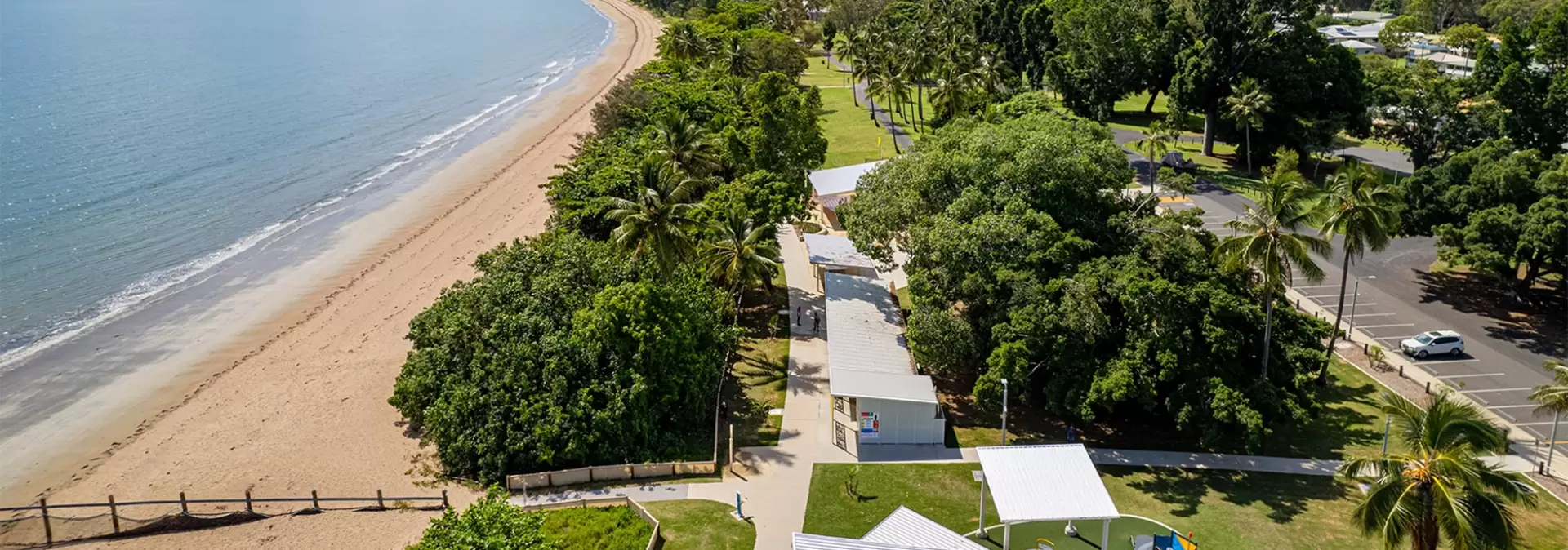
In particular, you’ll need to ensure that water, power and sewage lines are all available at the site — or can be brought up to it. If it’s the latter, you’ll need to organise pricing for that. You’ll need to establish location access and discover any concurrent works occurring nearby that might affect your chosen builder’s operations.
Some soil types may require additional engineering measures, such as concrete piles, to ensure the slab performs well over the long term.
Step 6: What approvals and development applications are required?
A Development Application (DA) is an application for consent carry out development work on a particular location. It is usually made to the local council and has several submission requirements consisting of standard forms, detailed plan drawings and detailed documents. From submission to approval (development consent) this can take 12 weeks or sometimes even longer.
Step 7: When does this facility need to be open – and what has to happen by when?
The amount of time required to complete the toilet facility is a critical question. When do you want it finished by? Sometimes this is determined by financials — when you’ll have the funding for the project, or when that funding might need to be used by. Nail down this finish/opening date, then start working your way back through the critical milestones to develop a reasonably comprehensive procurement timeline for design, consultation, council approvals, manufacture, installation and commissioning.
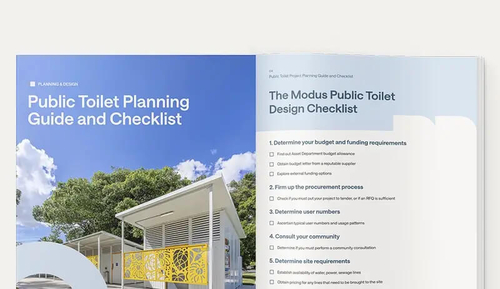
Download the Complete Guide and Checklist
Ensure your public toilet project is well-planned, accessible, and built to last. Get the key steps and expert insights in one easy-to-use guide.

Step 8: How should the building look and feel in its setting?
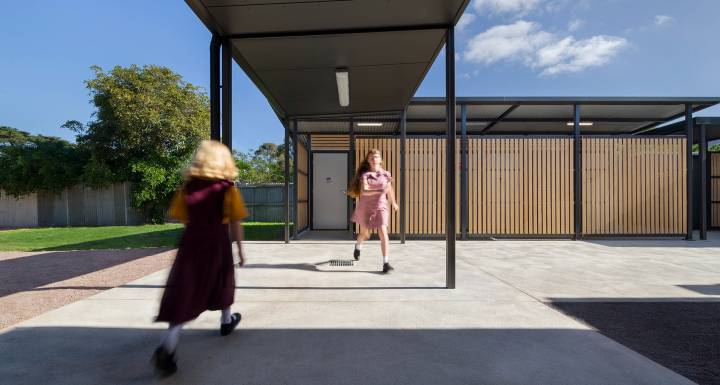
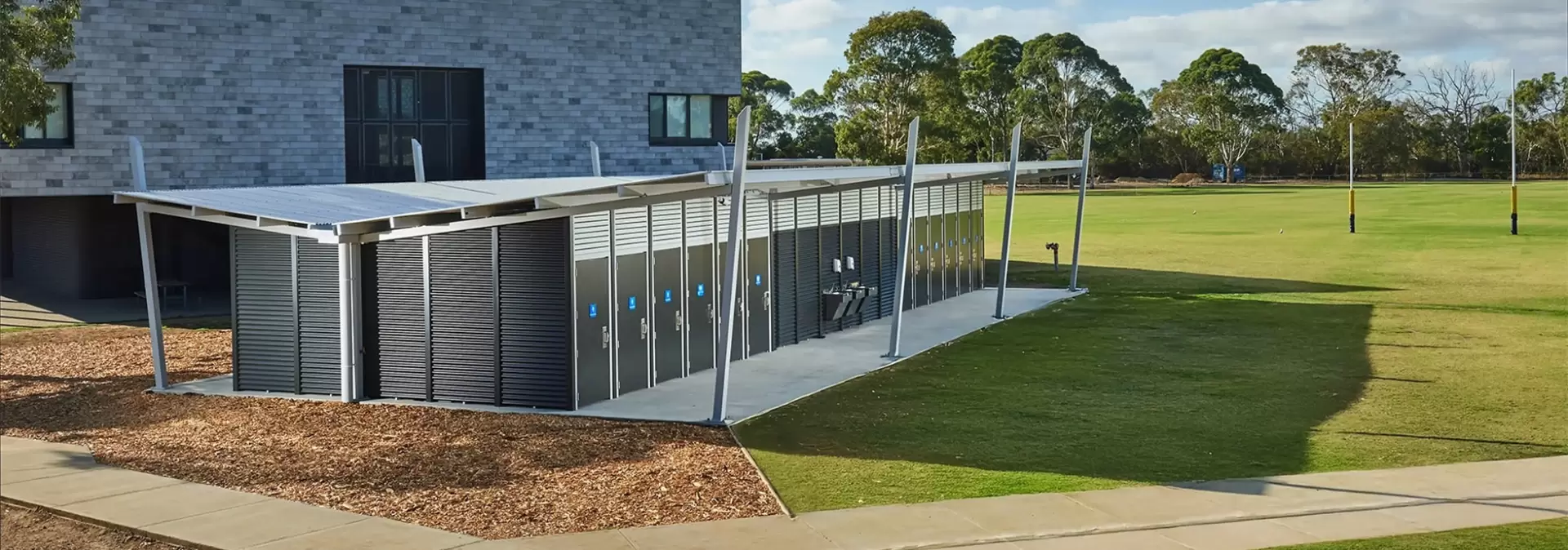
Start thinking about the aesthetic/visual look you want for your toilet block. Aesthetically, the most important thing is to come up with a style that fits the built environment and the location, suits the history of the place yet remains manufacturable (ie: not wildly expensive).
Alignment — where there is a match between architecture, materials, and colours, and the site’s location, surrounds and even the area’s local history — is the key to aesthetic success. Yet it’s important to remain fluid in your ideas — getting too locked-in can make things difficult and increase cost.
Many design considerations come down to the demands of the application and the needs of community. A design consultant can be a real help here — Modus has experienced designers able to assist free of charge.
Step 9: How will you ensure the design meets all relevant standards?
Public restrooms must comply with all relevant Australian Standards. This includes various design and engineering standards for areas subject to cyclones or floods, and national all Disability Discrimination Act requirements. As a minimum, toilets must comply with the Australian Standards AS 1428 and AS 2890 to ensure that they are accessible to all users.
A reputable supplier will be intimately knowledgeable with the interpretation of these standards — as well as CPTED guidelines to minimise the potential for public vandalism — and conduct ongoing professional development to stay abreast of updates and revisions.
Step 10: Who will you trust to supply the toilet building?
At this point, you’re probably ready to provide a purchase order to your supplier/manufacturer through your accounts or finance department. Working with a good supplier who specialises in this area and can perform customised design and manufacture will typically make things go smoother. A builder will have less know-how, placing more responsibility on your shoulders.
Step 11: How will you keep manufacture and installation on track?
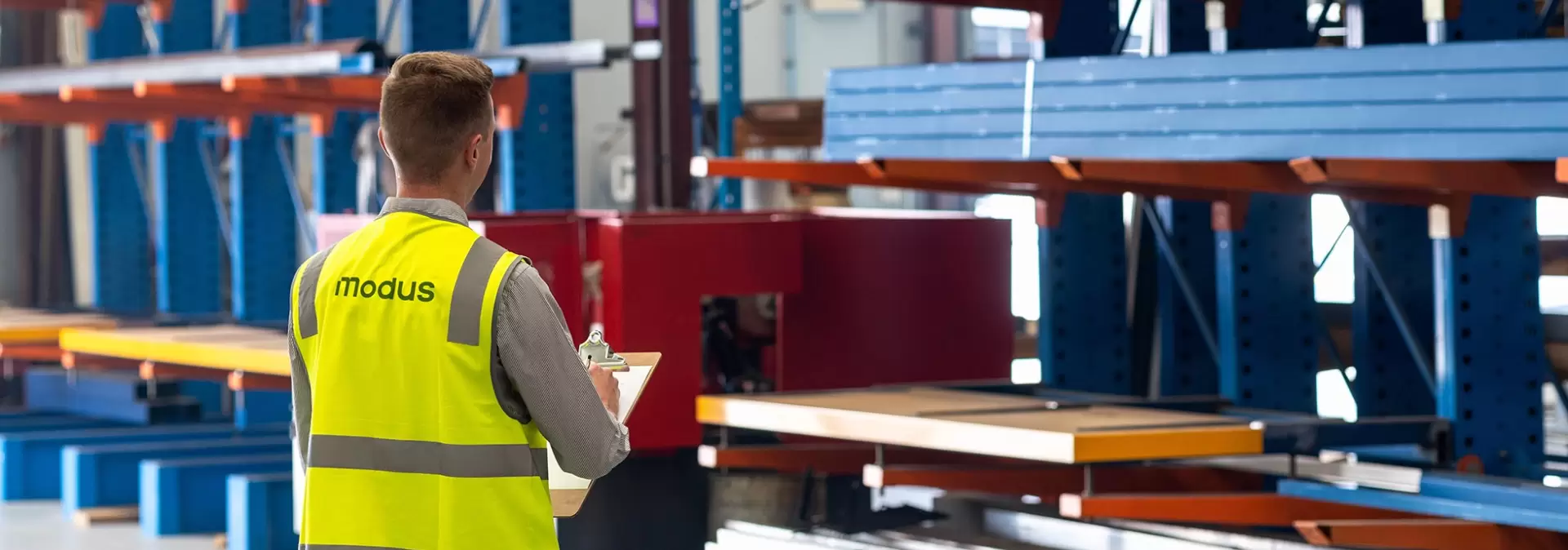
Communication becomes key at this point. Keep in touch with your supplier to ensure they’re meeting their production milestones at the right points. Good suppliers will proactively keep you apprised of progress. At the same time, you need to be on top of your responsibilities to have the site ready for the install. Site preparation — metered water pipes, power lines, and sewer lines up to 5m from the building bringing should be complete before installation begins.
Step 12: How will you confirm everything is installed and working as intended?
Once the install and commissioning is complete, there should be a handover. This allows you to test all functions, complete an audit of the installation, and reassure yourself that everything is in order and that your new facility is ready for public use.
A good, reputable supplier will actively participate in the handover — and, if required — commit to speedily rectify anything if needed
Step 13: How will you launch and communicate your new facility to the community?
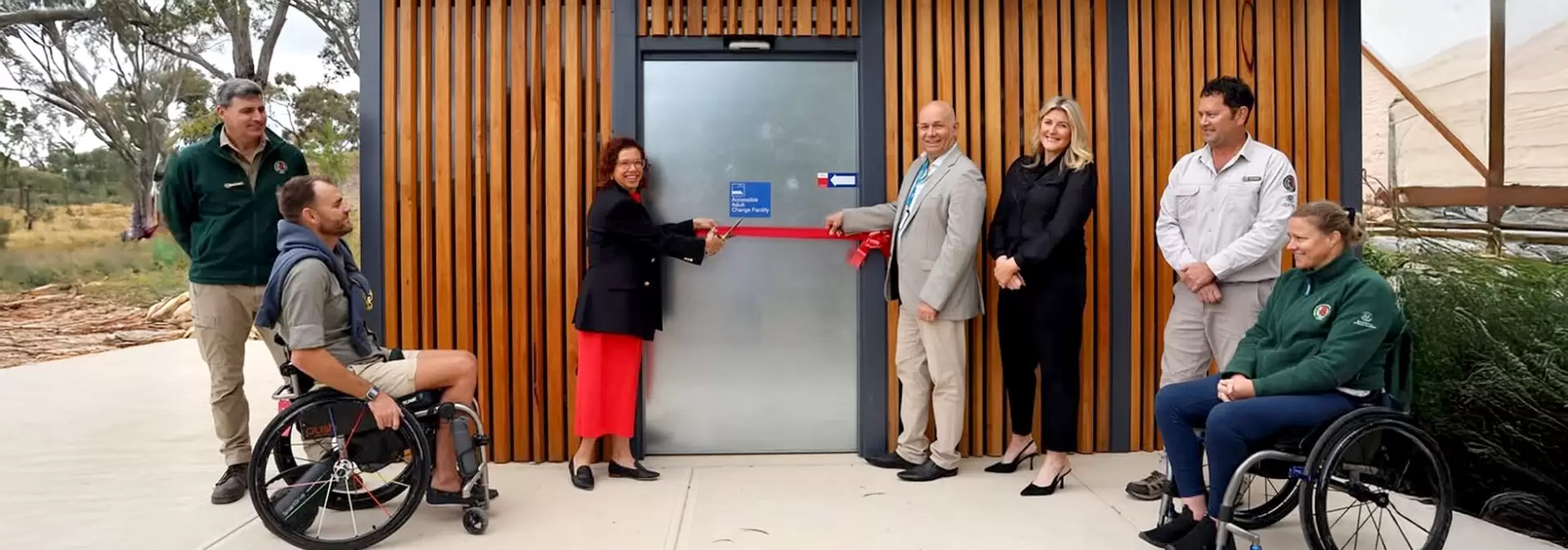
Once the facility is commissioned and open, take the time to acknowledge the work that went into it. Bringing project teams, stakeholders, and community members together to mark the opening helps build ownership, encourages positive use of the space, and closes the loop on what is often a long, complex journey.
Frequently Asked Questions
How long does a public toilet project usually take?
How much does a public toilet building cost?
When should we involve a prefabricated supplier like Modus?
Do we need a Changing Places facility or just a standard accessible toilet?
What are the biggest mistakes councils make with toilet projects?
Looking to move your public toilet project forward?
Let’s make your next project a success. Fill out the form below to start the conversation with our experienced team.