Internal finishes for toilet buildings: walls and floors compared

Council asset managers, architects, and designers routinely praise the structural quality and durability of Modus toilet buildings. The follow-up question is typically: what about the internals?
Project managers regularly have to trade off aesthetic appeal against budget and maintenance concerns. Still, at Modus we can deliver premium internal aesthetics alongside robust performance.
Here are the wall and floor finish options we typically specify, their trade-offs, and how they match up to your priorities.
Choosing walls: three finishes we typically recommend
Mini Orb Zincalume®: the proven workhorse
Since the late 1990s, Mini Orb (Zincalume®) raw ribbed zinc-aluminium alloy has become the proven internal wall solution. It's also the most cost-effective choice for many projects.
| Pros | Cons |
|---|---|
|
▪Lowest-cost cladding option available
▪Ribbed profile adds structural rigidity and deters tagging (no flat canvas)
▪Graffiti cleans off the surface easily
▪Zinc-aluminium coating resists corrosion
|
▪Horizontal ribs collect dust
▪Raw "shed" appearance does not suit high-profile or upmarket locations
▪Minor gaps can show at column covers
|
Mini Orb is best for high-traffic public facilities where cost, durability, and maintenance are critical.

Mini Orb Surfmist®: classic and durable
Take that same Mini Orb ribbed profile, but add a Colorbond Surfmist® finish. The result is a more inviting (i.e.: less raw and industrial-looking) internal wall.
| Pros | Cons |
|---|---|
|
▪Keeps the structural and anti-vandal benefits of the ribbed profile
▪Softer, more finished appearance than raw Zincalume®
|
▪Slightly higher cost than uncoated Zincalume®
▪Chemical graffiti removers can eventually dull appearance and finish
▪Riskier option for high-vandalism locations
|
Surfmist is the ideal choice for mid-range public facilities (parks, reserves, community centres) where project managers and designers need a more refined look but still require durability.

Aluminium Composite Panel (ACP): the premier option
ACP offers superior looks and a modern aesthetic. It's available in silver/grey (the common, and recommended, choice), white, and black.
| Pros | Cons |
|---|---|
|
▪Clean, modern, architectural finish
▪Dents rather than shatters on impact
▪Custom internal graphics can be applied
|
▪Can be pierced under high-force impact
▪ACP white quickly shows grime and needs more cleaning
▪Flat surface is an attractive target for graffiti
▪Most expensive of the three primary options
|
ACP is the best option for high-value, design-led projects in areas with low risk of vandalism.

Other wall options (with caveats)
Painted Compressed Fibre Cement (CFC)
✔️ Easy to repair (bog chips, repaint tags); available in any colour
❌ Flat surface is a graffiti magnet; heavier weight increases installation complexity and cost

Tiles
✔️ High aesthetic appeal
❌ Crack and shatter easily; repairs need a tiler plus exact-match replacement stock
❌ Grout is porous, absorbs odours, and requires periodic re-grouting
❌ Highest cost option. Not recommended for public toilet facilities.

Internal graphics (on ACP)
✔️ Can look spectacular for culturally themed or branded back walls
✔️ Anecdotal data suggests graphic walls are less likely to be vandalised, even in vandal-prone locations
❌ Increases project cost
Choosing flooring: what makes a good public toilet floor finish?
Internal floor finishes must all meet the mandatory R10 non-slip requirements for public facilities that are outlined in Australian Standard AS 4586.
Sealed concrete (broomed, honed, or swirl): the baseline option
Sealed concrete is durable, cost-effective, and straightforward to install and clean. Be aware that polished concrete fails AS 4586 and creates liability issues.
| Pros | Cons |
|---|---|
|
▪Lowest cost
▪Durable and easy to maintain
▪Broomed/honed/swirl finishes offer some aesthetic variation
▪Meets R10 non-slip rating requirement
|
▪Quicker to show wear and staining than other options
|
Sealed concrete flooring is the best choice for budget-constrained or high-traffic toilet facilities where function outweighs appearance.

Fine-Tune the Toilet Interiors
Epoxy flooring (flake): the low-maintenance favourite
A resin-based coating with embedded coloured flakes. This is the same system that's often used in commercial kitchens and hospitals.
| Pros | Cons |
|---|---|
|
▪Resists staining; stays cleaner longer
▪Flake pattern conceals dirt and minor marks
▪Low-maintenance; easy-clean
▪Meets slip-rating requirements
|
▪Pricier than sealed concrete
▪Flake's appeal in colour/appearance is very subjective
|
Epoxy flake is our standard recommendation and ideal for high-traffic public toilet facilities where ease of cleaning and long-term appearance are your priorities.

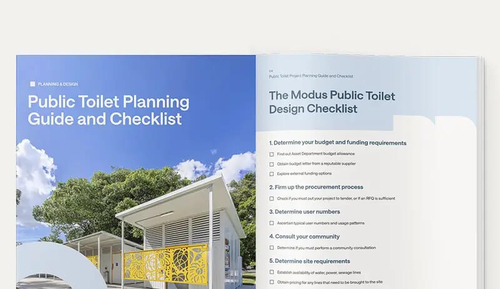
Get the Internal Materials and Finishes Guide
A quick comparison of every internal wall and floor finish we offer, with honest pros and cons for each. Find the right fit for your site, budget and maintenance team.

Exposed aggregate: textured and elegant
Concrete with the surface cement layer removed. Removing the surface cement layer during installation exposes the aggregates underneath. The result is an attractive, slip-resistant flooring.
| Pros | Cons |
|---|---|
|
▪Durable and cost-effective
▪Slip-resistant textured surface
▪Pressure-washes back to near-new condition
|
▪Textured surface traps grime more easily
|

Tiles
Floor tiles have exactly the same drawbacks as wall tiles.
✔️ Wide range of looks to suit design-led interiors
❌ Prone to cracking, grout discolouration and odour absorption
❌ Expensive to install and repair
❌ We do not recommend tiles for public toilet floors.

At a glance: popular public toilet wall finishes
| Finish | Relative cost | Durability and vandal resistance | Maintenance | Best for |
|---|---|---|---|---|
| Mini Orb Zincalume® | $ | High: ribbed profile deters tagging; zinc-alloy resists corrosion | Low: wipe-clean; ribs collect some dust | High-traffic public facilities; budget-driven projects |
| Mini Orb Surfmist® | $$ | High: same ribbed profile; harsh graffiti removers can dull finish | Low-moderate | Mid-range parks, reserves, community facilities |
| ACP | $$$ | Moderate: dents on impact; flat surface attracts vandals | Moderate: white shows grime; more graffiti-prone surface | Premium-end, design-led, low-vandalism projects |
| CFC (painted) | $$$ | Low-moderate: flat surface; chips require re-bogging | Moderate: easy to repaint | Sites where repairability outweighs vandal resistance |
| Tiles | $$$$ | Low: tiles easily crack/shatter; grout degrades | High: specialist tiler + matching stock needed | Not recommended for public toilets |
At a glance: public toilet floor finishes
| Finish | Relative cost | Durability and slip resistance | Maintenance | Best for |
|---|---|---|---|---|
| Sealed concrete (broomed/honed/swirl) | $ | Highly durable; meets R10 non-slip minimum | Low, but shows marks somewhat quickly | Budget or high-traffic facilities |
| Epoxy flake | $$ | Stain-resistant and durable; meets R10 non-slip rating | Very low: easy to clean | High-traffic public toilets; facilities where appearance matters |
| Exposed aggregate | $$ | Highly durable; texture is inherently slip-resistant | Low-moderate: pressure-washes well | Parks/reserves to match external paving |
| Tiles | $$$$ | Low: tiles easily crack/shatter; grout degrades | High: specialist tiler + matching stock needed | Not recommended for public toilets |
Your next public toilet project
At Modus we don't simply hand over a menu; we'll help you select internal finishes that are right for your specific project. And items like floor slip ratings, wall coatings, and standards compliance are details a less experienced manufacturer might overlook.
Looking to specify your next toilet facility soon? Book a free design consultation with the Modus team today.