Articles
Litchfield National Park
Litchfield National Park's grand landscape has been formed by water and features a number of spectacular waterfalls that draw tourists from all around the globe each year. Growing visitor numbers prompted the Northern Territory Government to upgrade facilities at six sites across the park that ranged from sealed-road waterfall carparks to 4WD-only campgrounds.
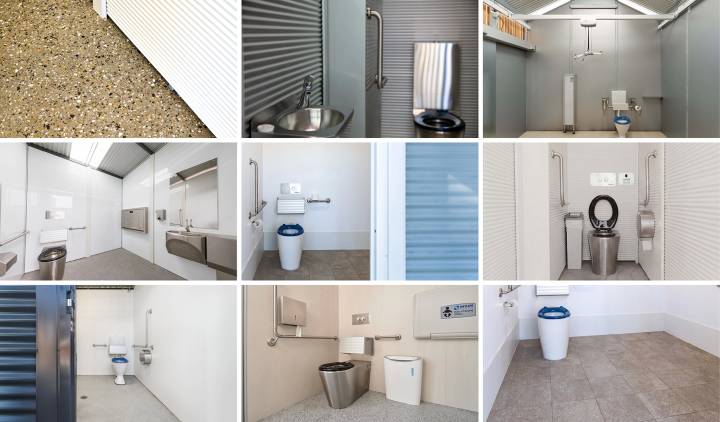
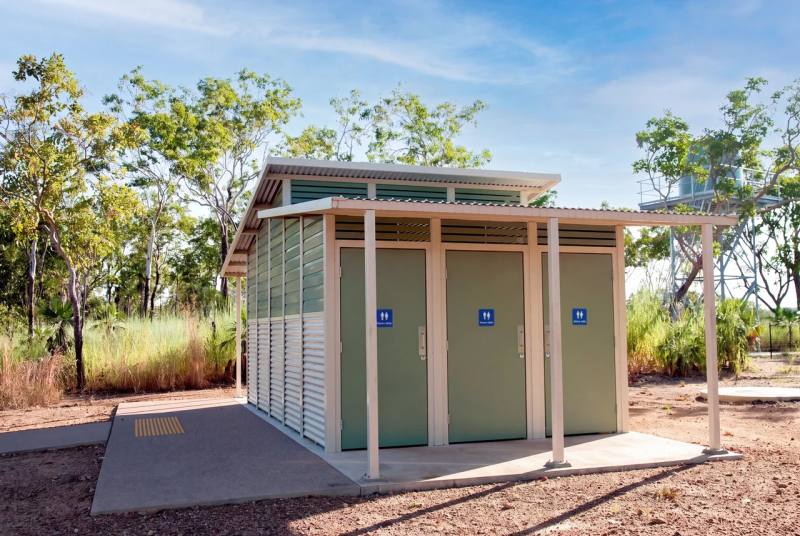
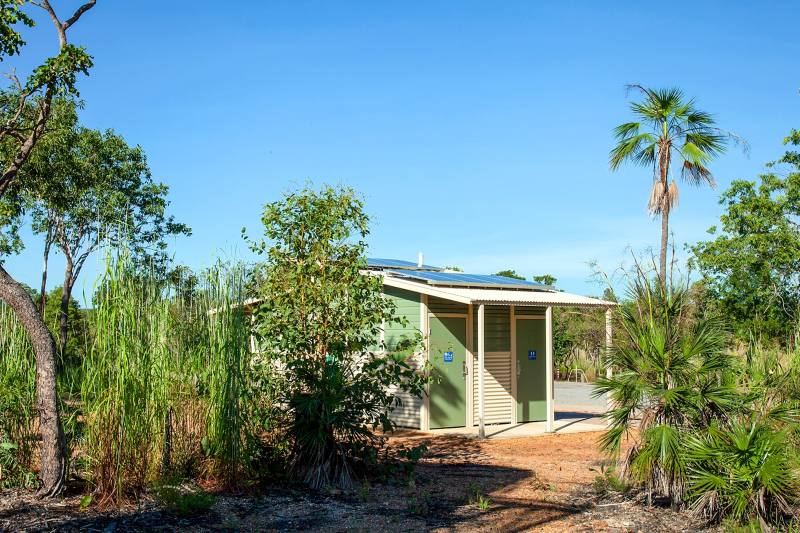
Modus Australia supplied six custom Noosa amenity buildings adapted for the individual requirements of each location from a single design.
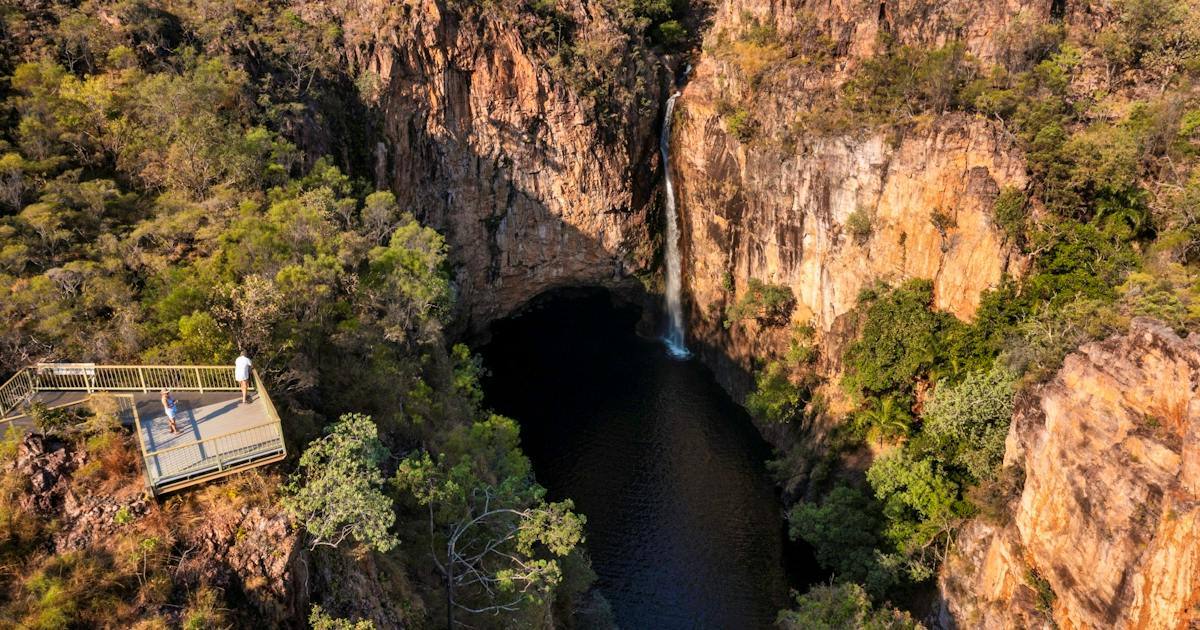
Northern Territory national park updates various popular tourist locations
The 1500 sq km of Australian National Park landscape contains most of the 'Top End's' natural habitats. Tourists are welcome to explore the national park by 2WD or 4WD and by foot via hiking trails to take in the wonderful waterfalls, rainforest pockets and many sacred sites of the Koongurrukun, Mak Mak Marranunggu, Werat and Warray peoples.
To help facilitate tourists frequenting the national park Modus Australia helped to design and manufacture public toilet buildings that are fit for purpose.
Dependable amenities are an unstated yet crucial part of a park's appeal. Clean, well-maintained facilities entice visitors to stay longer instead of simply passing through, and every additional night tourists spend in the Top End bolsters the local economy.
Essential public amenity facilities at Litchfield National Park
After a night under canvas, a hot shower and somewhere to clean up properly make all the difference to a trip. The Litchfield National Park has factored in the importance of this into the design of various toilet buildings located along the 2WD and 4WD tourist tracks. The amenity buildings provide a suitable stopping point to wash up dishes and prepare food allowing visitors to continue within the national park to discover the beauty and wonders at one of many popular tourism locations.
Project-wide, the facilities needed to deliver:
- Consistent quality across both sealed-road day-use sites and remote 4WD campgrounds
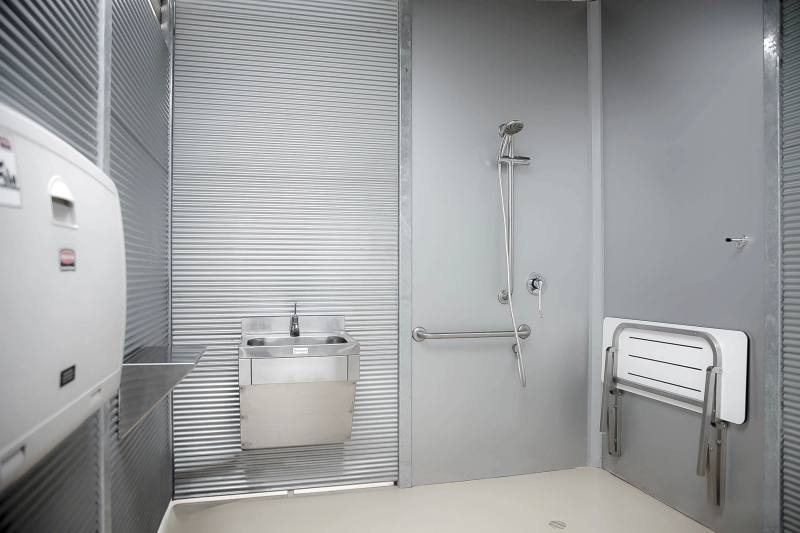
- Showers, hot water and camp kitchens for travellers in caravans, campervans and tents
- Accessible cubicles to ensure every visitor can use the park's facilities
- Durable fixtures tough enough for the May-to-October peak tourist season
Six sites across Litchfield National Park
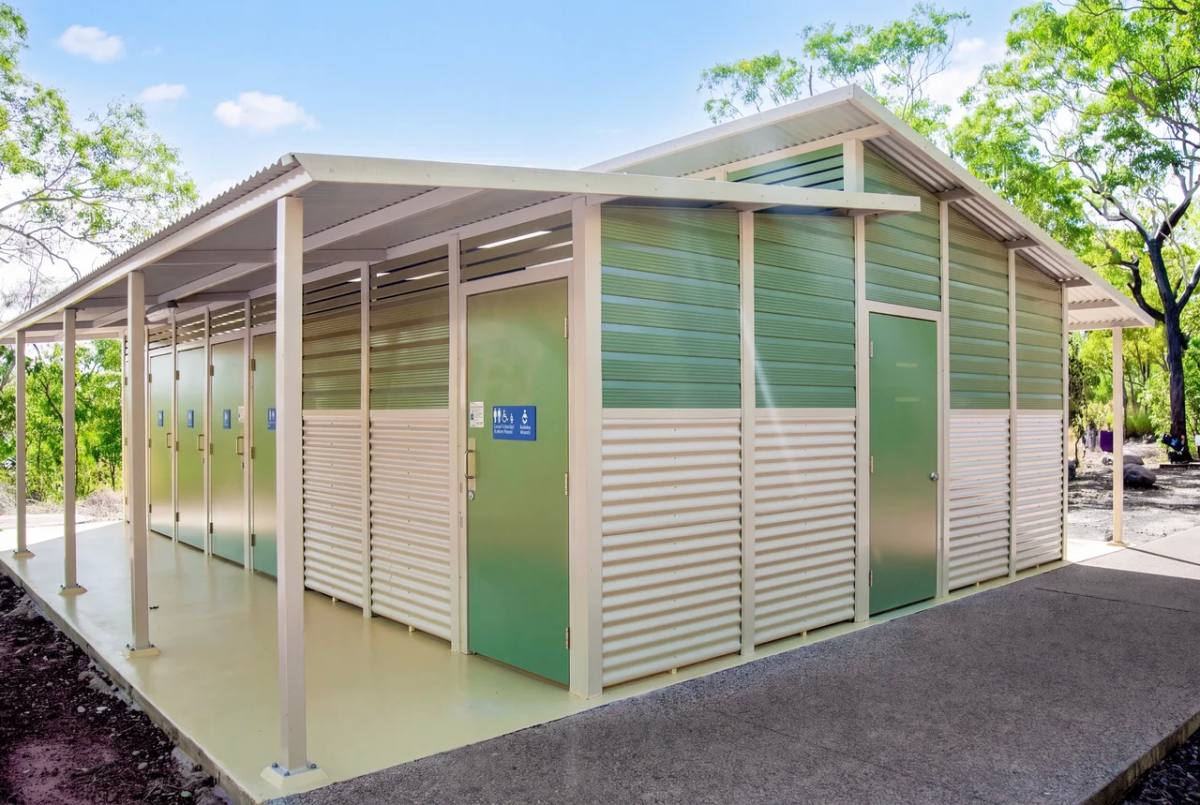
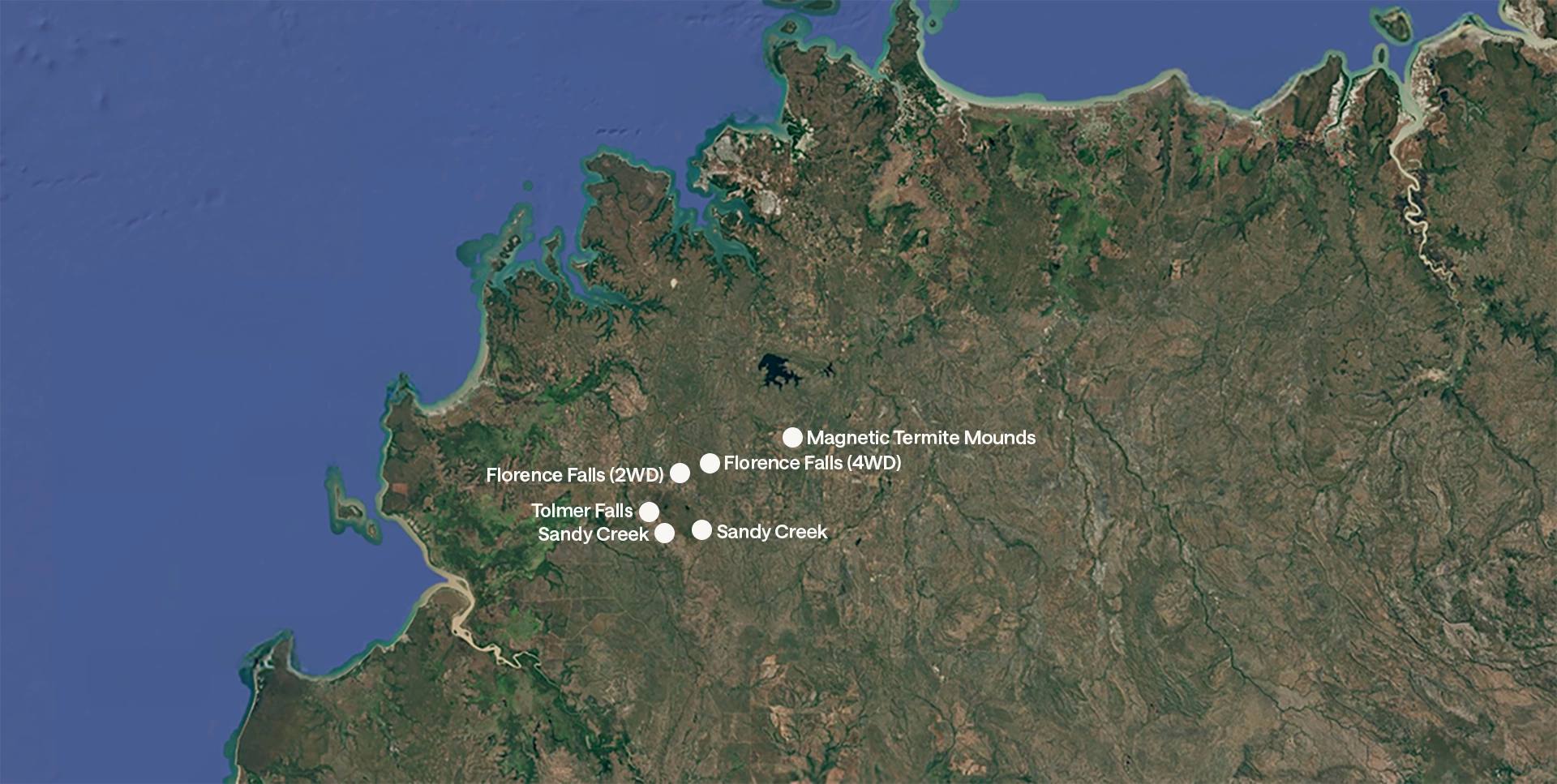
We rolled out the facilities as a single simultaneous program of work across the following six sites, rather than treating each location as a separate project.
- Sandy Creek (Tjaynera Falls)
- Tolmer Falls
- Florence Falls 4WD
- Florence Falls 2WD
- Magnetic Termite Mounds
- Litchfield Central Valley
Each site has its own characteristics and experiences a different level of use. The sealed-road carparks at Florence Falls and Tolmer Falls are extremely busy. Sandy Creek, on the other hand, is reachable only by four-wheel drive.
Installed by local contractors, anywhere in the park
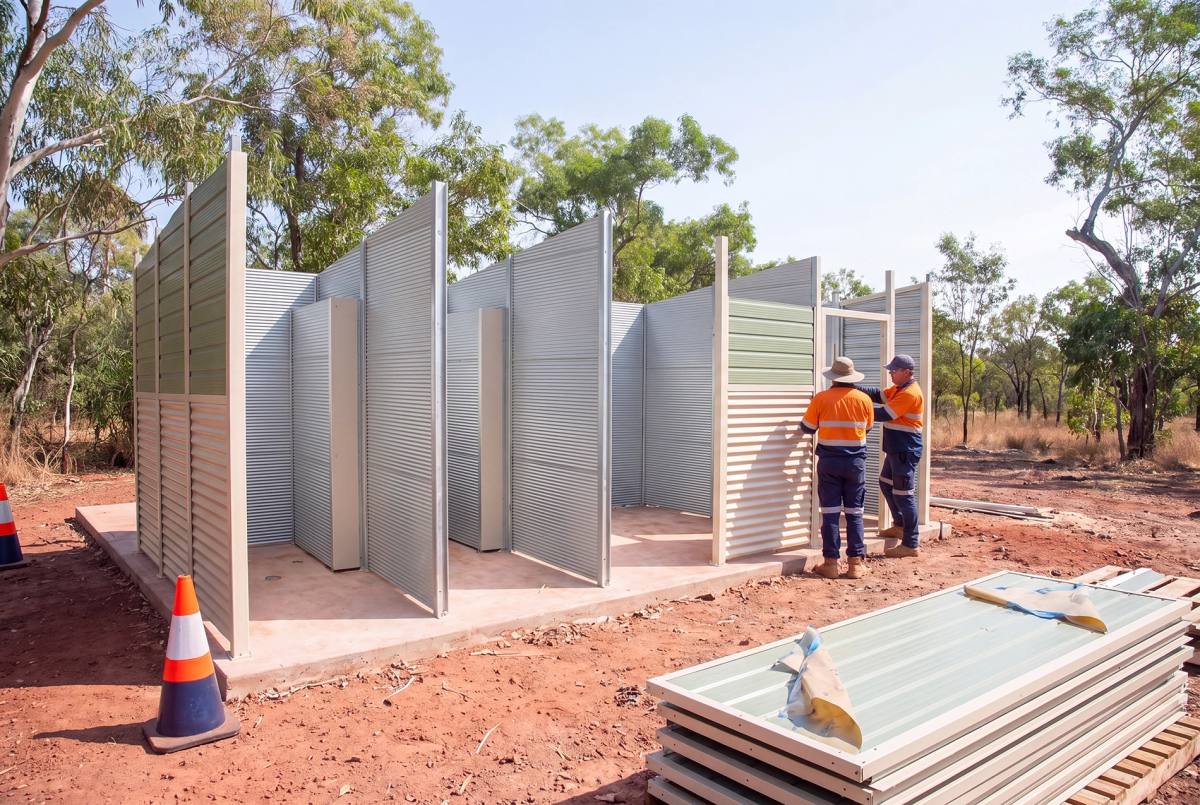
Getting any building into a national park is, first of all, a logistics hurdle. To overcome this, Modus delivered the new facilities as pre-clad modular panels with the doors pre-hung. We also supplied full engineering and construction drawings, a concrete specification and plumbing pre-lay plan, plus erection instructions.
We do this for all our projects, simplifying construction and expanding what's possible at remote sites:
- Any competent local builder can erect it: pre-construction and detailed install guidelines means no specialist construction expertise is needed; customers can use easily sourced local contractors
- No heavy lift needed: on-site assembly becomes standard; there's no need for a crane to shift and lift the building into position
- It can reach sites other buildings cannot: panels can be carried in on a standard truck or, where there is no vehicle access at all, flown in
- Minimal site impact: no need to clear access tracks for oversized loads and no need for heavy machinery on sensitive national park land
For any project manager overseeing six sites simultaneously, that consistency is crucial. Having the same installation method and the same documentation at each is the most surefire way to achieving the same result at every location.
Built to withstand the Top End
The Litchfield climate and location are hard on buildings. Sun and heat are intense all-year-round, the monsoon wet season brings lots of heavy rain, and the sites are a long way from the nearest maintenance crew.
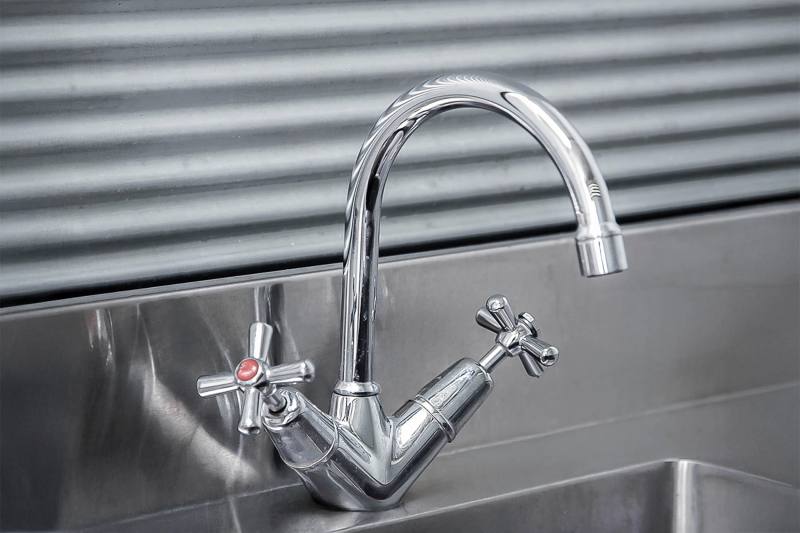
Modus Australia supplied a range of stainless steel fixtures capable of withstanding the rigours throughout the busy tourism peak periods. Our engineers also specified concealed cisterns, vandal-resistant lighting and lockable electrical enclosures throughout, recognising that Litchfield's sites lack passive surveillance and a damaged fixture might sit broken for weeks. Hot water was included across the sites, delivered in conjunction with the wider project team.
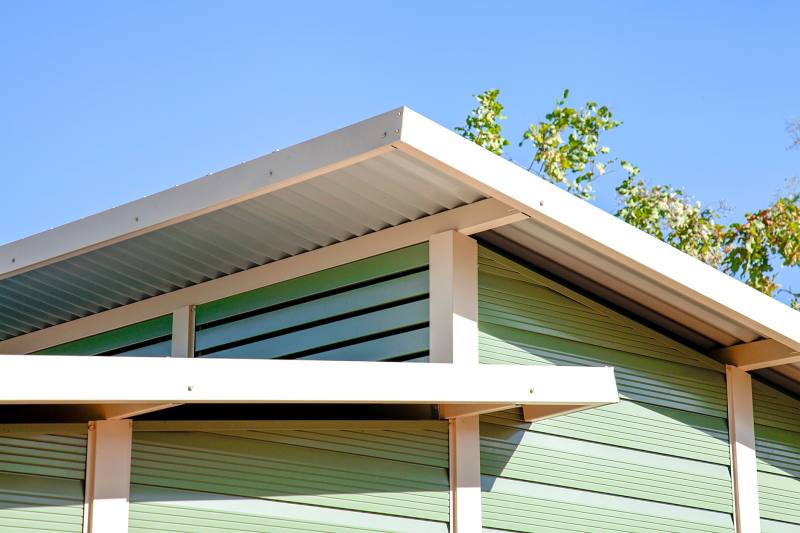
We consciously selected a colour scheme that would blend into the landscape. In a national park, buildings should not visually dominate their setting. Paperbark roofing and trims echo the tones of the surrounding bark and dry grass, while Pale Eucalypt doors, louvres and cladding match the foliage. Since the Colorbond finish is pre-coloured, there is no repainting cycle to manage.
All structural steelwork was engineered to the cyclonic standards that apply across the Top End, with engineering certification confirming the wind pressures at each site. We use the same engineering approach across every Modus building in cyclone-prone regions of the Northern Territory, Queensland and Western Australia.
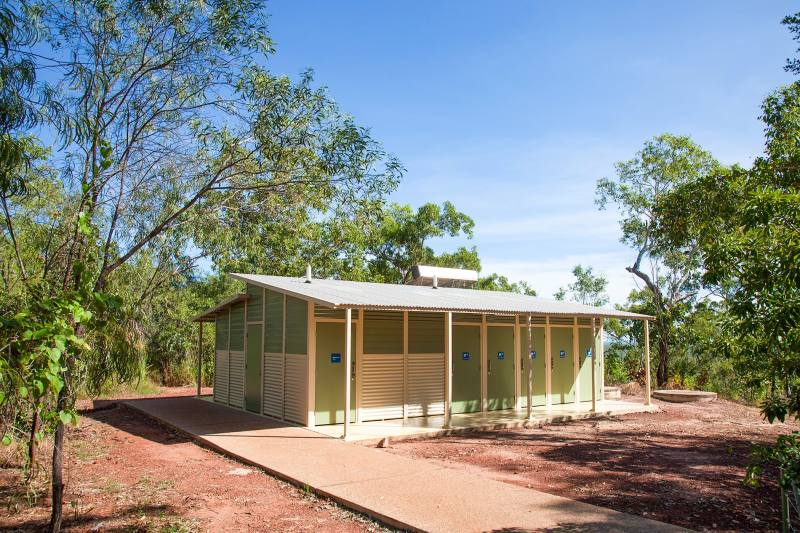
Six sites, one design
Six buildings, one design, delivered across one of the Northern Territory's most visited national parks. It was a pleasure working with the Northern Territory Government on this project.