
Why Prefab Toilet Buildings Outperform Concrete/Masonry Construction

Prefab toilet buildings are purpose-designed for public open space projects, while traditional concrete blocks are a legacy method that carries hidden costs. Prefab typically delivers a better balance of whole-of-life value, construction speed and user experience without skimping on long-term sturdiness.
Here is how they compare on the key factors for asset managers:
- Vandalism and repair: Concrete is hard to damage but expensive to fix when it's busted. Prefab linings and cladding are impact resistant and individual sheets can be replaced quickly without major works
- Maintenance and cleaning: Concrete walls sealed to the floor require more time to clean and have a tendency to retain odours. Prefab is designed for fast wash downs and easier deep cleaning
- Upfront and lifetime cost: Concrete buildings usually cost more to construct and maintenance is harder. Prefab is often 40–50% cheaper upfront and has a lower whole of life cost
- Construction speed and disruption: Concrete toilet facilities need many tradespeople on site for weeks. Modular prefabricated buildings are faster to install and cause less disruption to the park or streetscape
- Design and appearance: Concrete can look solid but is limited once poured. Prefab systems are more flexible and let you alter floorplans, claddings and colours to match the surrounds
What are the hidden costs of concrete toilet construction?
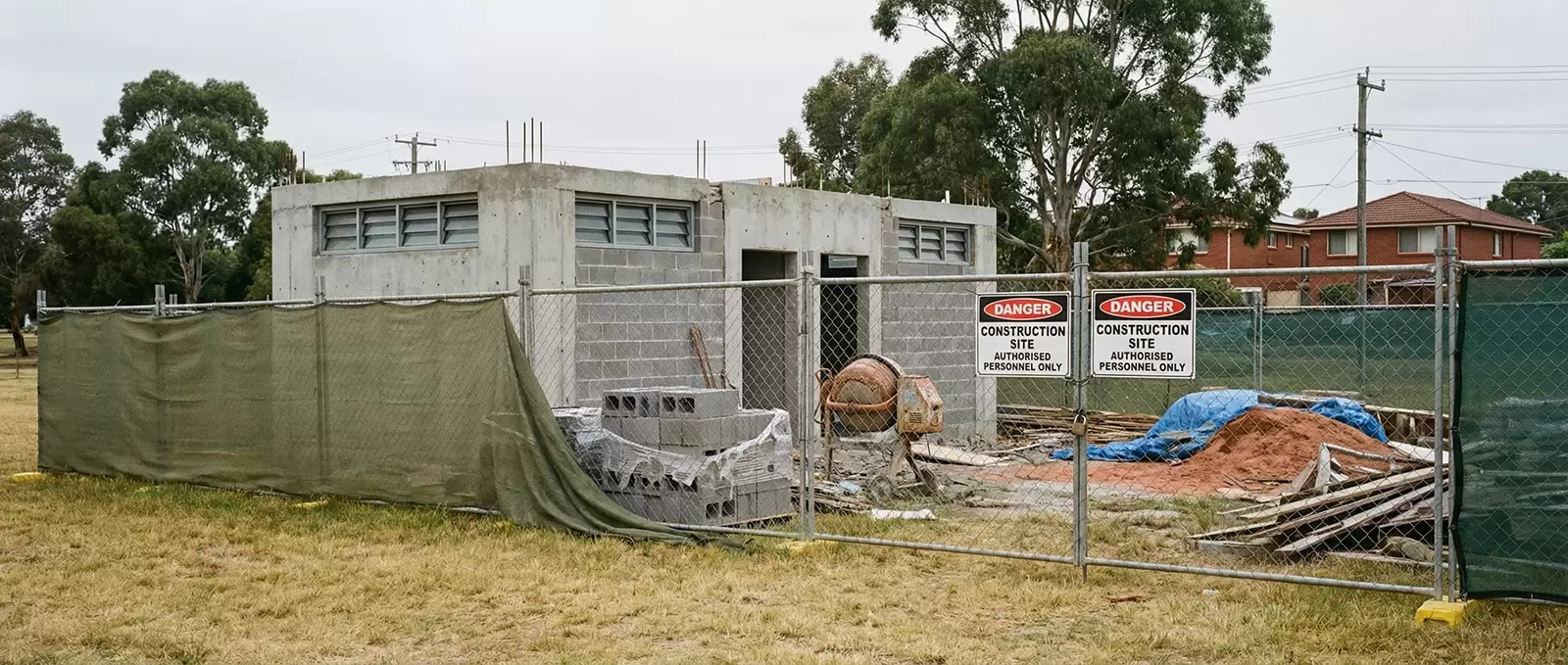
Concrete toilet blocks are heavy-duty, wet-trade structures where nearly all construction occurs on site. This offers total customisation, but also introduces budget and timeline risks because of the need to let poured concrete cure, and the potential for weather delays.
Even in the best scenario, you can have a busy construction site that remains fenced off from the public for weeks or months. Furthermore, once the concrete is poured, the design is rigid; modifications or refurbishments are difficult and expensive.
Advantages of Modus Prefab Toilet Buildings
Modus allows councils to bypass the messiness of traditional construction. Because we're an Australian-based specialist public toilet manufacturer, our system is engineered for full AS1428 compliance and to cope with the demands of our coastal, urban and remote environments.
1. Superior Hygiene and Cleaning
One of the biggest complaints about older concrete blocks is the smell. Porous blockwork and grout lines absorb urine and cleaning chemicals over time, generating permanent odours. Modus buildings use continuous materials and have raised internal walls for more effective pressure washing and better airflow. This simple design choice helps councils significantly reduce maintenance costs while keeping facilities odour-free.
2. True Anti-Vandal Design
It is a common misconception that heavy masonry is the only way to stop vandals. In reality, large flat concrete surfaces are an excellent canvas for graffiti, which is difficult to remove without ghosting. Modus uses corrugated MiniOrb internal linings which are difficult to tag and easy to repaint or replace. As an anti-vandal toilet manufacturer, we design our structural framing and fixtures for superior vandal resistance, so toilet facilities can stay open and functioning even in areas with an unsavoury reputation.
3. Faster Project Delivery
By shifting construction off-site, we remove weather and the availability of tradespeople as a project management problem. A Modus toilet building arrives as a prefabricated panel system, ready for immediate and rapid installation. This minimises community disruption and reduces the safety risks associated with long-term construction sites in active public parks.
The 20-Year Cost Advantage
For council asset managers, the initial purchase price is only one part of the financial equation. A 20-year cost study comparing a standard Modus prefab building to a traditional concrete block revealed that the prefabricated option provides a substantial saving over the total life of the asset.
- Approximately 38 percent lower initial capital expenditure
- Roughly 32 percent lower total lifecycle cost over two decades
- Significantly reduced financial risk from onsite construction variations
- Predictable maintenance schedules that simplify long-term budgeting
See the Numbers: Concrete vs Prefab 20-Year Cost Study

Cyclone-Engineered Performance
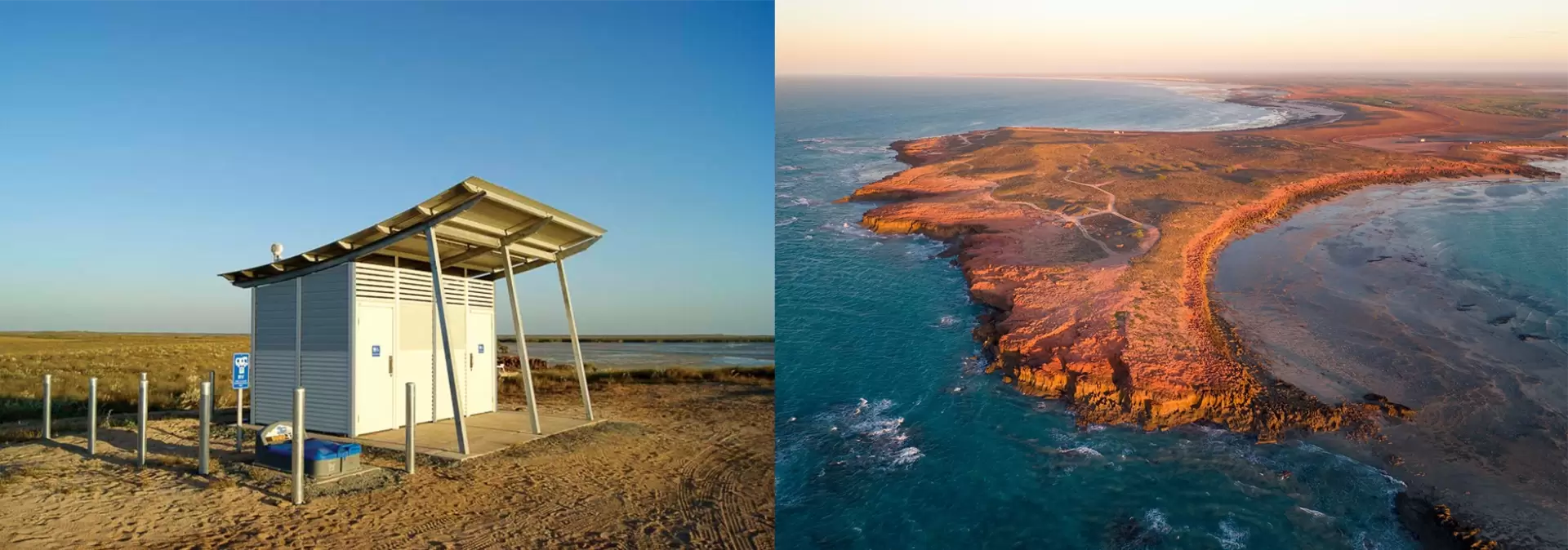
Public infrastructure in coastal Australia must withstand extreme weather events without becoming a maintenance liability. Our buildings are engineered for high-wind environments, including Region D cyclone zones such as Cape Keraudren in Western Australia. Hot-dip galvanised steel and high-grade aluminium componentry is a key part of why these facilities remain structurally sound and operational even after high-intensity weather events and only ever only require limited routine maintenance.
Proven Flood Resilience: A Tale of Two Structures
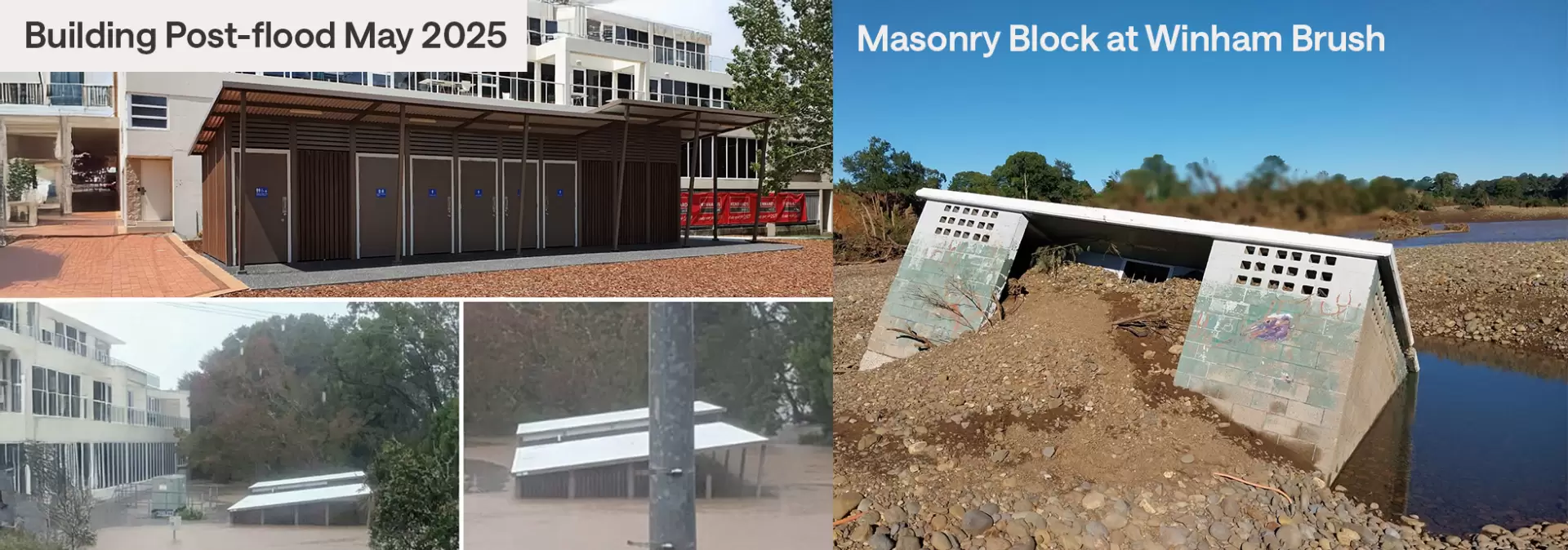
A major flood event in Taree, NSW, in In May 2025, provided a clear illustration of the difference between traditional masonry and prefabricated toilet structures. A masonry toilet block at Winham Brush was completely destroyed and buried in sediment. Nearby, a Modus prefabricated building remained anchored and structurally sound despite being almost entirely submerged.
Following the event, the prefabricated facility only needed a professional clean before being reopened. Several design features ensure our buildings can withstand such extreme conditions:
- Gaps engineered beneath walls to relieve intense water pressure
- A lightweight structure securely integrated with a concrete slab base
- Water-resistant materials that allow for easy cleaning and do not absorb moisture
Comparison: Concrete vs Modus Prefab
| Purchase consideration | Masonry / concrete toilet buildings | Modus prefab toilet buildings |
|---|---|---|
| Vandalism | Large flat surfaces like painted concrete, masonry or tiles are a prime target for graffiti. Concrete toilets withstand impacts well, but when serious damage occurs sectional replacement is not possible and patching or repainting is costly | Internal MiniOrb sheeting resists graffiti and tagging through its ribbed surface and robustness, and can be cleaned more easily. Tough linings and cladding with fully welded steel framing are highly impact resistant, and individual sheets can be replaced quickly if they are damaged |
| Maintenance | Walls are usually sealed to the floor, so achieving a high-quality clean is time consuming. Grout lines and porous materials tend to accumulate grime and odours over time | Durable, easy-to-clean materials and gaps under walls allow efficient wash downs with a pressure cleaner and suitable chemicals. It is easier to get a consistent, high-quality clean |
| Asset life | Typically 30+ years, but long-term condition depends heavily on quality maintenance and timely repairs | Comparable 30+ year structural life, with details and materials selected specifically for maximum durability in harsh public environments |
| Upfront cost | On site construction with many tradespeople generally means high upfront cost that is difficult to justify over the life of the asset | Often 40–50% cheaper than concrete or blockwork options while delivering comparable lifespan and lower maintenance requirements |
| Lifetime cost | Increasingly difficult maintenance and repairs can driver up whole of life costs and may lead to earlier replacement | Lower upfront cost, easier maintenance and simpler, faster cleaning combine to reduce whole of life cost while providing the same or better service life |
| Construction speed and disruption | Built entirely on site with skilled tradespeople, meaning a longer project, higher labour costs, more waste and more disruption to the community | Prefabricated modular kit form system enables fast, accurate installation with less waste, lower on-site cost and reduced disruption |
| User experience | Can perform well initially, but concrete finishes and the increasing presence of odours can make buildings feel dark and uninviting as they age | Designed to stay fresh and comfortable for users throughout the asset life, with better ventilation and longer-lasting internal finishes |
| Design and appearance | Blockwork is flexible but concrete is limited in form once poured. Appearance is generally solid but can be harder to adapt or refresh over time | Modular system supports many floorplans, materials and finishes so the building can complement the surrounding open space and support future changes |
In Closing
While concrete will always have a place in specific architectural applications, the benefits of prefabricated systems are difficult to ignore for standard public infrastructure. By choosing a Modus system, councils can deliver high-quality, durable and hygienic facilities that serve the community for decades, all while significantly reducing upfront capital expenditure and long-term maintenance costs.
Still deciding between fixing an old block or building new? Read our guide on Refurb vs Replace to see if a patch-up is costing you more.
Frequently Asked Questions
Why are councils replacing aging brick toilet blocks?
Can a modern building match the visual style of a heritage or park area
Yes. A major priority is delivering a "visually appropriate solution" for the specific environment. As seen in projects like Picton Memorial Park and Bluegum Community Centre, we utilise custom graphics, rooflines, and architectural finishes to respect the local character while still delivering a durable, modern structure.
What makes these replacements 'futureproof' compared to the old facilities?
The previous facilities often wore down because traditional materials struggled to withstand high foot traffic and harsh cleaning regimes. Our replacements are designed for high-foot-traffic urban environments such as Gordon Station using materials that are highly resistant to corrosion, vandalism, and wear, ensuring they remain serviceable and cost-effective for years to come.

